Creative activities lwmfcrafts can turn ordinary materials into something personal, useful, and fun. Whether the project involves paper, cardboard, fabric, paint, recycled materials, or simple objects found around the home, crafting gives people a chance to experiment and express their ideas.
Creative work is not only about producing a beautiful finished item. The process of choosing materials, trying different techniques, solving small problems, and changing an idea along the way can be just as valuable. The National Association for the Education of Young Children (NAEYC) emphasizes that open-ended art experiences give children opportunities to explore materials, make choices, and create original work rather than simply copying a model.
That makes creative activities lwmfcrafts useful for more than passing the time. They can encourage curiosity, imagination, communication, patience, and problem-solving while providing an enjoyable hands-on experience.
BIO
| Label | Information |
|---|---|
| Topic | Creative Activities lwmfcrafts |
| Category | Creative Activities & Crafts |
| Main Purpose | Spark imagination and creativity |
| Activity Type | DIY Arts and Crafts |
| Suitable For | Kids, teens, and adults |
| Skill Level | Beginner to advanced |
| Common Materials | Paper, cardboard, fabric, and paint |
| Popular Ideas | Collage, cards, flowers, and bookmarks |
| Eco-Friendly Option | Recycled and reusable materials |
| Key Benefit | Encourages creative thinking |
| Learning Value | Supports focus and problem-solving |
| Social Value | Great for family and group activities |
| Best Feature | Flexible and easy to personalize |
What Are Creative Activities lwmfcrafts?
Creative activities lwmfcrafts refers to hands-on projects that involve making, designing, decorating, building, or transforming materials into something new. The possibilities are broad, ranging from simple paper projects to more detailed artwork and recycled-material creations.
A good creative activity does not always need a complicated set of instructions. In fact, an open-ended project can sometimes provide more room for imagination. Instead of asking someone to reproduce an exact example, the activity can provide materials and a basic idea while allowing the maker to decide what the final creation should look like.
For example, a cardboard box could become a small house, vehicle, storage container, stage, or imaginary creature. A sheet of paper might become a drawing, collage, greeting card, paper sculpture, or storybook.
This freedom is important because creativity often develops when people are allowed to make choices. UNICEF research describes creativity as the ability to develop new ideas and solutions, noting that experiences and environments can influence creative development.
Why Creative Activities Matter
Creative activities provide a practical way to explore ideas instead of simply thinking about them.
When someone draws, cuts, folds, builds, paints, or assembles materials, they have to make decisions. They may need to decide what shape to use, how two pieces should connect, which colors work together, or how to fix something that did not turn out as expected.
These small decisions can encourage problem-solving and persistence.
Creative activities can also provide an opportunity for self-expression. NAEYC notes that children use creative arts to express feelings and ideas in unique ways, while creative experiences can connect with learning in areas such as language, mathematics, science, and engineering.
The process can also be social. Friends, siblings, classmates, or family members can work together, exchange ideas, and learn from one another.
Benefits of Creative Activities lwmfcrafts
One of the strongest advantages of creative activities lwmfcrafts is their flexibility. A project can be adapted to different ages, interests, abilities, and available materials.
Builds Imagination
Crafting gives the imagination something physical to work with. A collection of simple materials can become the starting point for an entirely new idea.
Someone might see a paper tube as a basic household object, while a creative thinker may imagine it as part of a rocket, telescope, character, or miniature building.
Encourages Problem-Solving
Craft projects rarely go perfectly every time. Paper may tear, glue may not hold, or a structure may lean to one side.
Instead of treating these moments as failures, they can become opportunities to ask, “What could I try differently?”
That mindset can make creative work a useful way to practice flexible thinking.
Supports Focus and Patience
Some projects can be completed quickly, while others require several stages. Cutting shapes, arranging materials, painting details, or assembling a design can encourage careful attention.
The goal should not be perfection. The value comes from giving the maker enough time to explore and complete the project at a comfortable pace.
Encourages Self-Expression
There is no single correct way to represent an idea through art. Two people can receive the same materials and create completely different results.
This freedom allows personal interests, experiences, and preferences to appear naturally in the finished work.
Creates Opportunities for Connection
Crafting can also become a shared activity. Family members can work around the same table, friends can exchange ideas, or groups can collaborate on a larger project.
UNICEF has highlighted how handicraft activities can create opportunities for communication, collaboration, creativity, and supportive social interaction.
Easy Creative Activities lwmfcrafts Ideas
You do not need expensive equipment to begin. Some of the most enjoyable projects can start with basic materials already available at home.
Paper collage is one simple option. Collect pieces of paper in different colors and textures, then arrange them into an image, pattern, landscape, or abstract design.
Handmade cards are another flexible project. A plain sheet of cardstock can become a birthday card, thank-you card, celebration card, or personalized note.
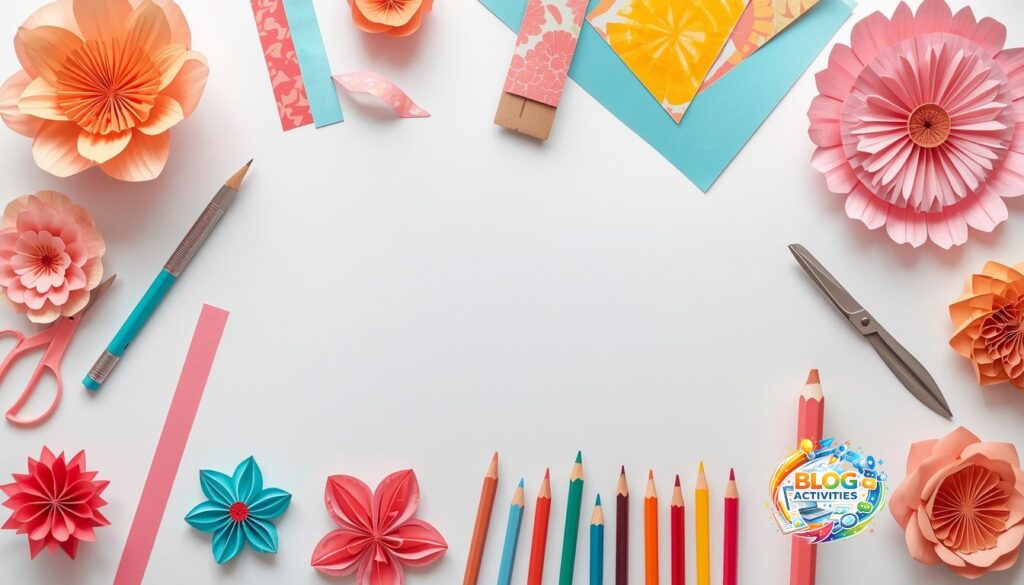
Paper flowers offer an opportunity to experiment with folding, cutting, layering, and color combinations.
Bookmark designs are quick and practical. A bookmark can include drawings, patterns, motivational words, or themed artwork.
Paper weaving introduces another technique. Strips of paper can be arranged over and under one another to create patterns and textures.
The important point is that these projects do not need to follow one exact design. Give the activity enough structure to get started, but leave room for personal choices.
Creative Activities With Recycled Materials
Recycled materials can be especially useful for creative activities lwmfcrafts because they encourage people to look at ordinary objects differently.
Clean cardboard packaging can become a miniature building. Paper rolls can be transformed into decorative objects or simple characters. Old paper can become collage material. Small pieces of unused fabric can be combined into patterns.
Before using recycled materials, make sure they are clean, dry, and appropriate for the project. Avoid materials with sharp edges, harmful substances, or parts that are unsuitable for the age of the person doing the activity.
The idea is not simply to reuse something. It is to reconsider what an ordinary object could become.
NAEYC describes making as hands-on creative expression and includes activities such as constructing with recycled materials, weaving, sewing, woodworking, and experimenting with different forms of construction.
Creative Activities for Kids
Children often benefit from having access to materials that allow them to make choices rather than simply copy a finished example.
A simple animal craft can begin with paper shapes. Instead of giving children a picture to reproduce, provide circles, rectangles, triangles, paper, and drawing tools and ask what kind of animal they can invent.
Story crafts can combine creativity with language. After reading or inventing a short story, participants can create characters, settings, or props connected to the story.
Nature-inspired art can involve arranging safe natural materials into patterns or pictures. UNICEF’s early-learning activity resources include ideas involving nature, collage, drawing, painting, and experimentation with different materials.
Another option is open-ended painting. Different brushes, sponges, or other suitable tools can create different marks and textures.
The adult’s role does not need to be that of an instructor who corrects every decision. Asking questions such as “What are you making?”, “How did you decide on that shape?”, or “What could you add next?” can encourage children to explain their thinking.
NAEYC recommends process-focused art experiences in which there is not necessarily a right or wrong result and where children can explore techniques and materials in their own ways.
Creative Activities for Teens and Adults
Creative activities are not limited to young children. Teens and adults can explore more detailed projects based on their interests.
Personalized journals can combine writing, drawing, lettering, collage, and decoration.
Room decorations can turn creative work into something functional. Handmade wall art, decorative organizers, paper designs, or simple displays can add a personal touch to a space.
Scrapbooking provides another way to combine photographs, drawings, patterns, written memories, and decorative materials.
Upcycling projects can give an old or unused object a new purpose. A plain container might become an organizer, while leftover materials can become decorative elements.
The best project is usually one that matches the maker’s interests. Someone who enjoys drawing may prefer illustration, while someone who likes building may enjoy cardboard construction.
How to Choose the Right Project
Choosing the right creative activities lwmfcrafts project starts with the person rather than the materials.
Consider the following:
- Age and experience: Beginners may enjoy simple projects with fewer steps.
- Interests: Choose themes connected to animals, nature, stories, music, design, or hobbies.
- Available materials: A good project should work with materials that are easy to obtain.
- Time: Select a quick activity when time is limited and a larger project when there is more time.
- Skill level: Start with manageable challenges and gradually introduce more complicated techniques.
- Freedom: Whenever possible, allow the maker to make meaningful choices about the final result.
A project that is too complicated can become frustrating. A project that is too restrictive can leave little space for imagination.
How to Make Crafting More Creative
A small change in the way an activity is presented can make a big difference.
Instead of saying, “Make this exact picture,” try saying, “Can you create something using these materials?”
Instead of choosing one required color scheme, provide several options.
Instead of immediately fixing a mistake, give the maker time to decide whether the mistake can become part of the design.
This approach shifts attention from producing a perfect object to exploring possibilities.
NAEYC’s guidance on process-focused art specifically emphasizes exploration, child choice, original work, and allowing enough time for experimentation.
Another useful approach is to combine materials. Paper, cardboard, fabric, drawing tools, and other safe craft supplies can produce different textures and visual effects.
You can also introduce a creative challenge. For example, ask participants to create something using only three materials or to turn an ordinary object into something completely different.
These challenges encourage creative thinking without requiring a single correct answer.
Avoid Focusing Too Much on Perfection
One common mistake in crafting is judging the finished product too quickly.
A project does not have to look professional to be valuable. An unusual shape, unexpected color combination, or imperfect construction can reflect experimentation.
For children especially, comparing their work with an adult-made example can discourage independent choices. NAEYC warns that sample-based projects can lead children to focus on whether their work matches the example rather than exploring their own ideas.
A better approach is to focus on the process.
Ask what the person discovered. Ask what they enjoyed. Ask what they might change next time.
This creates a healthier creative environment where mistakes become part of learning.
Building a Creative Routine
Creativity becomes easier to explore when there is regular time for it.
A dedicated craft box can keep basic materials together. It might contain paper, cardboard, crayons, pencils, washable art supplies, tape, and other suitable materials.
You can also maintain an idea notebook. Whenever an interesting project comes to mind, write it down or make a quick sketch.
A regular creative routine does not need to take hours. Even a short session can provide time to experiment.
NAEYC’s family guidance notes that meaningful art experiences do not require extensive preparation or expensive supplies. Everyday household materials can be enough to create worthwhile experiences.
The key is consistency rather than complexity.
Turning Everyday Objects Into Inspiration
Inspiration does not always come from craft websites or prepared project instructions.
Look around the room.
A window can inspire a landscape drawing. A collection of leaves can inspire patterns. Packaging can suggest a building design. A favorite story can inspire characters. A rainy afternoon can become the theme for a painting.
This way of observing everyday life can help make creative activities lwmfcrafts feel more personal.
UNICEF’s research on creativity emphasizes that imagination can involve transforming familiar objects and ideas into new combinations.
The goal is to develop the habit of asking, “What else could this be?”
That simple question can lead to surprisingly original ideas.
Making Creative Activities More Meaningful
The strongest creative experiences often connect to something meaningful.
A handmade card can express appreciation. A decorated box can solve a storage problem. A story illustration can bring a favorite tale to life. A recycled-material project can encourage awareness of how everyday objects are used.
Creative work can also become collaborative. One person can design the background, another can create characters, and another can add written details.
When people share ideas, the final result may become something that none of them would have created alone.
Creative arts can also connect with other areas of learning. NAEYC describes creative expression as something that can support learning across areas such as literacy, mathematics, science, engineering, and social-emotional development.
That makes crafting more than a separate pastime. It can become a practical way to explore ideas.
Simple Tips for Better Results
Keep the workspace organized so materials are easy to find.
Choose safe, age-appropriate tools and supervise activities when necessary.
Give the project enough time rather than rushing toward a finished result.
Encourage experimentation with shapes, textures, patterns, and materials.
Allow the creator to make decisions whenever possible.
Most importantly, value the process as much as the finished craft.
If a project does not work, treat it as useful information. Maybe a different material would work better. Perhaps the design needs another support. Maybe the original idea can become something completely different.
That attitude helps creativity grow naturally.
Conclusion
Creative activities lwmfcrafts offer a simple way to explore imagination, hands-on learning, self-expression, and problem-solving. They can be as straightforward as a paper collage or as involved as a recycled-material construction project.
The most valuable creative activity is not necessarily the one that produces the most polished result. It is often the one that encourages the maker to think, experiment, make choices, and discover something new.
You do not need a large collection of expensive supplies to begin. Start with a few safe materials, choose an idea that feels interesting, and leave enough freedom for the project to develop naturally.
Whether you are crafting alone, with family, or with friends, the possibilities are wide open. Take an ordinary material, add a little curiosity, and see where your imagination takes you.
Mwah or Muah: The Meaning Behind This Cute Expression
FAQs
What are creative activities lwmfcrafts?
Creative activities lwmfcrafts are hands-on craft and art projects that encourage people to make, design, decorate, build, or transform materials into something new. They can include drawing, painting, collage, paper crafts, recycled-material projects, and many other forms of creative expression.
What are some easy creative activities lwmfcrafts ideas?
Simple ideas include paper collages, handmade cards, bookmarks, paper flowers, drawings, nature-inspired artwork, and recycled-cardboard projects. These activities can usually be adapted according to age, skill level, and available materials.
Do creative activities need expensive supplies?
No. Many worthwhile creative projects can be made using paper, cardboard, drawing materials, fabric scraps, and clean recyclable objects. The creativity comes from how the materials are combined and used, not from how expensive they are.
How do creative activities help children?
Creative activities can provide opportunities for self-expression, experimentation, problem-solving, communication, and imaginative thinking. Open-ended art also allows children to make their own choices and explore materials without having to produce identical results.
How can I encourage more creativity during crafting?
Give the creator a selection of materials, avoid insisting on one correct result, and ask open-ended questions about the project. Allow enough time for experimentation and treat mistakes as opportunities to try another approach.
Are recycled materials good for creative activities?
Yes. Clean and safe recycled materials can provide excellent opportunities for creative construction and upcycling. Cardboard, paper packaging, and other suitable household materials can become the foundation for imaginative projects.
What is the most important part of a creative activity?
The creative process is often more important than producing a perfect final object. Exploring materials, making decisions, solving problems, and developing an original idea are valuable parts of the experience.