

Writing stronger blog blueflamepublishing posts does not require endless hours or perfect conditions. Many writers struggle because they treat every post like a major project. They research too long, edit while drafting, and lose momentum. The result is weak content that takes forever and still feels flat.
Stronger posts come from a clearer process. You focus on the reader first, structure your thinking early, and protect your writing time. Speed and quality work together when you stop treating them as opposites. This approach has helped countless writers produce clearer, more useful posts without burning out.
BIO
| Label | Information |
|---|---|
| Article Title | How to Write Stronger blog blueflamepublishing posts Fast |
| Main Focus | Writing clearer posts in less time |
| Target Reader | Bloggers and content writers |
| Core Method | Outline first, draft fast, edit later |
| Key Benefit | Better quality without long hours |
| Time Goal | Solid draft in under 90 minutes |
| Main Steps | Clarify, outline, draft, tighten |
| Writing Style | Short paragraphs, active voice |
| Common Mistake Fixed | Editing while drafting |
| Best Habit | Protect focused writing blocks |
| Outcome | Stronger, more useful posts |
| Next Action | Apply the process to one post today |
Why Many Posts Fall Short
Most weak posts share the same roots. The writer starts without a clear purpose. They try to cover too much or speak to everyone at once. The language stays vague. Paragraphs run long. The opening fails to earn attention, and the ending drifts off without a useful next step.
Time pressure makes these problems worse. When you feel rushed, you skip the outline or jump straight into editing the first sentence. That slows everything down. Readers notice when a post lacks focus. They leave quickly, and search engines notice the thin engagement.
The good news is these issues are fixable. A simple shift in process changes the outcome. You spend less time staring at a blank page and more time producing work that actually helps someone.
Start With Clarity Before You Write
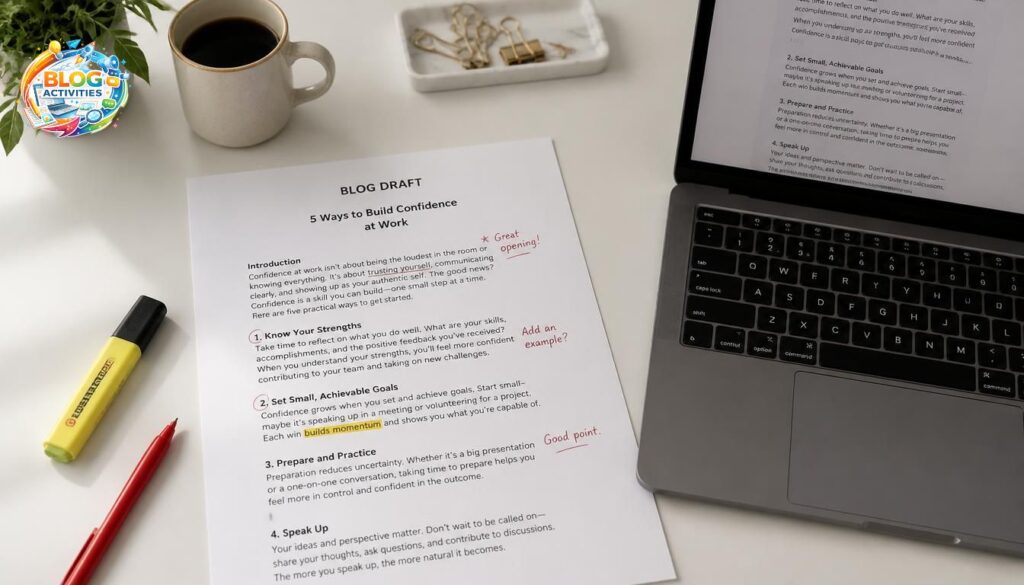
Every stronger post begins with one clear decision. What specific problem does this piece solve for the reader? Not a broad topic. One concrete problem.
Write that problem in a single sentence. Then turn it into a working title that promises a useful outcome. Keep the title honest. Readers and search engines both respond better to clear promises than clever wordplay.
Next comes the one-sentence promise. This is the main idea the entire post will deliver. Everything else supports it. If a point does not serve that promise, cut it. This focus alone makes blog blueflamepublishing posts feel tighter and more valuable.
Take five to ten minutes on this step. It prevents the common trap of writing yourself into a corner later.
Build a Lean Outline Quickly
An outline is the single biggest time-saver for stronger writing. It does not need to be fancy. List the main sections in the order a reader needs them. Under each section, add two or three bullet points of what you will cover.
Keep the outline lean. You are not writing the post yet. You are creating a map. A solid outline lets you draft without stopping to wonder what comes next. Many writers who switch to outlining report cutting their total writing time nearly in half.
Include the opening hook and the closing call to action in the outline. Knowing how you will start and finish removes hesitation when you begin drafting.
Write the First Draft Without Stopping
This is where speed happens. Set a timer. Close extra tabs. Silence notifications. Your only job is to get the ideas down.
Do not edit. Do not reread the previous paragraph. Do not fix typos. Write through the outline from top to bottom. If you get stuck on a section, leave a quick note and move on. You can fill gaps later.
Most people find their first draft improves once they stop criticizing themselves mid-sentence. The goal is progress, not perfection. A complete messy draft is far more useful than a perfect first paragraph that took an hour.
Aim for short paragraphs from the start. Two to four sentences is usually enough. This keeps the writing scannable and forces clearer thinking.
Strengthen the Opening and Closing
The introduction has one job: earn the next few minutes of the reader’s attention. Start with the problem they already feel. Show you understand it. Then state what the post will deliver. Avoid long setups or generic statements about how important the topic is.
Write the introduction after you finish the body if that feels easier. Many writers do this because they understand the full promise only after the draft is complete.
The conclusion should not simply summarize. Restate the main value in fresh language. Then give the reader one clear next action. It might be applying one technique from the post or starting their own outline. End with encouragement that feels genuine rather than forced.
These two sections often determine whether someone finishes the post and whether they remember it.
Tighten the Language and Flow
Once the full draft exists, shift into editing mode. Read the piece out loud. Awkward sentences become obvious. Long, winding thoughts become clear.
Replace vague words with specific ones. Instead of saying something is “good” or “important,” show why it matters or what it looks like in practice. Prefer active voice. It keeps the writing direct and energetic.
Cut filler. Words and phrases that add no meaning slow the reader down. Look for opportunities to turn abstract advice into concrete steps or short examples. Specificity builds trust and makes the advice usable.
Check the transitions between sections. Each part should lead naturally into the next. If a jump feels abrupt, add a short bridge sentence.
Add Real Value Without Overcomplicating
Stronger blog blueflamepublishing posts give the reader something they can use. That might be a simple checklist, a before-and-after comparison, or a practical habit they can try today.
You do not need original research for every post. Drawing from proven practices and explaining them clearly already adds value. When you share a technique, include the reason it works and how to apply it. Readers remember posts that help them take action.
Keep examples short and relevant. One clear illustration beats three vague ones.
Build Habits That Support Both Speed and Quality
Consistency matters more than occasional bursts of brilliance. Writing regularly trains your brain to produce clearer work faster. Even short daily sessions compound over time.
Protect your drafting time. Batch research and outlining into separate sessions from writing. Context switching drains energy and slows progress. Many productive writers set specific blocks for each stage of the process.
Use simple tools that reduce friction. A basic timer for focused sprints works well. A reusable outline template saves repeated decisions. Keep a small collection of strong openings or transitions you can adapt when needed.
Know when a post is strong enough. Endless polishing rarely improves the core value. Publish, then improve based on real feedback if needed.
Avoid the Mistakes That Waste Time
Several common habits quietly undermine both speed and strength. Starting without an outline leads to wandering drafts. Editing while writing kills momentum. Researching mid-draft creates constant distraction. Writing for search engines first instead of readers produces thin, forgettable content.
Perfectionism on the first draft is another frequent trap. The first version exists to capture ideas, not to impress. Save the critical eye for later passes.
Trying to cover every angle in one post also weakens the result. One focused idea, explored well, outperforms a scattered collection of points.
Watch for walls of text. Long unbroken paragraphs discourage reading. Break them up. Use short sentences where they create clarity and rhythm.
A Practical Way to Begin Today
Choose one upcoming post. Spend ten minutes clarifying the reader problem and the one-sentence promise. Build a simple outline with main sections and a few supporting points under each. Then set a timer and write the full first draft without stopping.
After the draft is complete, strengthen the opening and closing. Tighten the language. Add one concrete example or checklist. Read it out loud once more.
This process produces stronger blog blueflamepublishing posts in less time than the old habit of writing and rewriting the same paragraphs. The more you practice it, the more natural it becomes.
Clarity comes from deciding what matters before you type. Speed comes from protecting the drafting stage. Quality comes from thoughtful editing after the ideas are on the page. Put these pieces together and the work improves. Readers notice the difference. So will you.
Kai Zackery Wayans Age: Simple Facts and Timeline
FAQs
How long should it take to write a stronger blog post using this method?
Most writers finish a solid first draft in 45–90 minutes once the outline is ready. The full process from idea to polished post often takes under two hours with practice.
Do I need special tools to write stronger blog blueflamepublishing posts faster?
No. A simple outline, a timer, and a quiet space are enough. The method relies on process, not software.
What if my first draft still feels weak?
That is normal. Strength comes in the editing pass. Focus on clarity, specific language, and a useful ending rather than rewriting everything.
Can this approach work for short posts as well as longer ones?
Yes. The same steps scale. Shorter posts simply need fewer sections in the outline and less time in the drafting stage.
How do I stay consistent with this process?
Start with one post at a time. Protect a regular writing block and reuse a basic outline template. Consistency builds both speed and quality over time.