

Understanding your academic performance is important, especially when you want to know how well you are doing throughout your college or university journey. Your grades from individual semesters provide a useful picture of your progress, but they do not always show your overall academic standing. This is where cumulative GPA becomes important.
A cumulative GPA represents your academic performance across multiple semesters. It combines the grade points you have earned in eligible courses and considers the credit hours associated with those courses. Whether you are applying for a scholarship, preparing for graduation, planning to attend graduate school, or simply checking your academic progress, knowing how to calculate it can help you make better decisions.
A cumulative GPA calculator makes this process easier by allowing you to enter your grades and credit hours to estimate your overall GPA. Instead of calculating every course manually, you can use a simple formula or an online calculator to understand your academic standing.
However, getting an accurate result requires more than entering a few grades. You need to understand your university’s grading scale, credit hours, repeated-course policies, and the difference between semester GPA and cumulative GPA.
This guide explains how cumulative GPA works, how to calculate it step by step, common mistakes to avoid, and practical ways to improve your academic performance.
BIO
| Label | Information |
|---|---|
| Topic | Cumulative GPA Calculator |
| Full Form | Cumulative Grade Point Average |
| Category | Education |
| Main Purpose | Measure overall academic performance |
| Calculation Method | Total Quality Points ÷ Total GPA Credits |
| Common GPA Scale | 4.0 Scale |
| Main Components | Grades and Credit Hours |
| Calculation Type | Credit-Weighted Average |
| Academic Coverage | Multiple Semesters |
| Primary Users | College and University Students |
| Key Benefit | Track Overall Academic Progress |
| Common Uses | Scholarships, Admissions, and Graduation |
| Result Format | Numerical GPA Score |
What Is Cumulative GPA?
Cumulative GPA, also known as cumulative grade point average, is a measurement of a student’s overall academic performance across multiple completed semesters or academic terms.
Unlike semester GPA, which measures your performance during one particular semester, cumulative GPA considers the eligible courses you have completed over a longer period.
For example, imagine a student completes four semesters at university. They earn different grades in each semester, and their credit hours may also vary. Their cumulative GPA combines the results from all eligible courses to provide one overall academic score.
Most colleges and universities use a numerical grading system, such as a 4.0 scale. Under this system, letter grades are converted into grade points. An A may represent 4.0 points, a B may represent 3.0 points, and a C may represent 2.0 points, although exact values depend on the institution.
Your cumulative GPA can help you understand whether your academic performance is improving, declining, or remaining consistent over time.
It is also important to remember that a cumulative GPA is generally credit-weighted. This means a four-credit course can influence your GPA more than a one-credit course because it carries greater academic weight.
What Is a Cumulative GPA Calculator?
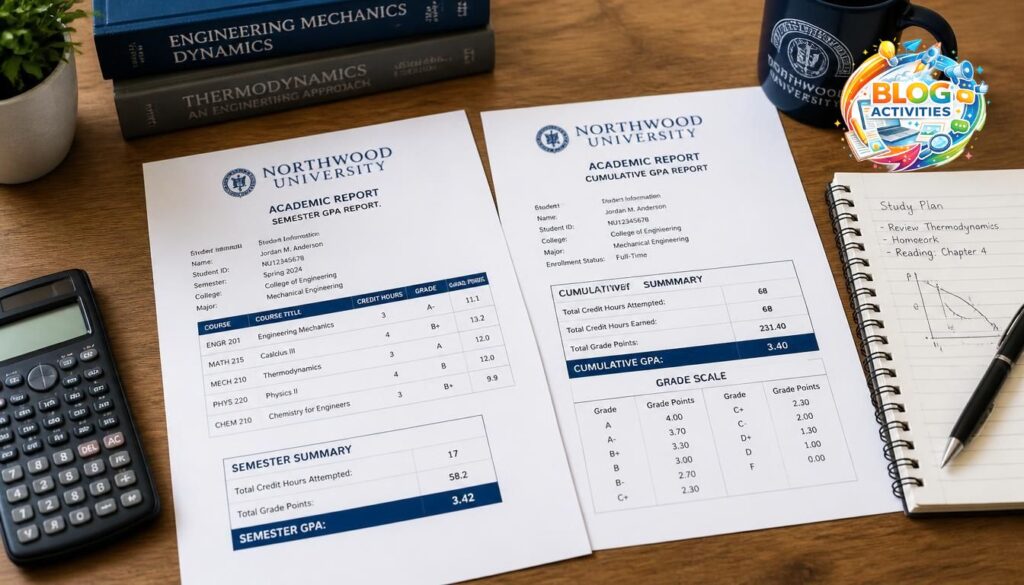
A cumulative GPA calculator is a tool that helps students estimate their overall grade point average using course grades, grade points, and credit hours.
Rather than adding individual grades and dividing them by the number of courses, a calculator uses the credit-weighted GPA method. This produces a more accurate result when courses have different credit values.
Depending on the calculator, you may need to enter:
- Your previous cumulative GPA.
- Your previously completed GPA credit hours.
- Your current course grades.
- Credit hours for each course.
- Your institution’s grading scale.
After entering the required information, the calculator estimates your updated cumulative GPA.
For example, if you already have a cumulative GPA of 3.20 after completing 45 credit hours and earn a 3.60 semester GPA over another 15 credits, the calculator can combine both academic records.
This is particularly helpful for students who want to know how their latest semester will affect their overall academic performance.
A calculator is useful for planning, but it does not replace your official transcript. Universities may apply specific rules to repeated courses, transfer credits, withdrawals, and other academic records. Always use your institution’s official GPA policy when you need an official result.
How to Calculate Cumulative GPA
Calculating cumulative GPA is easier when you understand how grade points and credit hours work together. You do not need advanced mathematical skills, but you should have accurate information about your completed courses.
The following process explains the standard calculation method.
1. Collect Your Course Grades
Start by collecting your grades from all completed courses that count toward your GPA.
You can usually find this information on your university transcript or student portal. Make sure you include the correct courses from each semester.
For example, a student may have completed the following courses:
| Course | Letter Grade | Credit Hours |
|---|---|---|
| English | A | 3 |
| Mathematics | B | 4 |
| Biology | A | 3 |
| History | C | 2 |
These grades will be converted into grade points before calculating the GPA.
2. Convert Grades Into Grade Points
The next step is converting letter grades into numerical values.
Many American colleges use a 4.0 grading scale. A common example is:
| Letter Grade | Grade Points |
|---|---|
| A | 4.0 |
| A- | 3.7 |
| B+ | 3.3 |
| B | 3.0 |
| B- | 2.7 |
| C+ | 2.3 |
| C | 2.0 |
| D | 1.0 |
| F | 0.0 |
This is an illustrative grading scale, not a universal standard. Some universities use different grade-point values, plus and minus grades, or alternative grading systems.
Before calculating your GPA, check the grading scale used by your institution.
3. Check the Credit Hours
Credit hours represent the academic weight assigned to a course.
For example, a course worth four credits usually has more influence on your GPA than a course worth two credits.
This is why you should never assume that every course has equal importance when calculating your cumulative GPA.
Check the credit hours listed on your academic transcript. Use the credits that your institution includes in GPA calculations rather than automatically counting every course you have taken.
4. Calculate Quality Points
Quality points are calculated by multiplying the grade points earned in a course by its credit hours.
The formula is:
Quality Points = Grade Points × Credit Hours
For example, suppose you earn an A worth 4.0 grade points in a three-credit course.
Your quality points would be:
4.0 × 3 = 12 quality points.
Repeat this calculation for every eligible course.
5. Add the Quality Points and Credit Hours
After calculating quality points for each course, add them together.
You also need to calculate the total GPA credit hours.
For example:
- Total quality points: 38
- Total GPA credit hours: 12
These two figures are required to calculate the GPA.
6. Divide the Total Quality Points by Total Credits
The final step is dividing total quality points by total GPA credit hours.
The result is your GPA for the courses included in the calculation.
If you are calculating your cumulative GPA, make sure the totals include all relevant semesters rather than only your latest semester.
Cumulative GPA Formula Explained
The standard cumulative GPA formula is based on total quality points and total GPA credit hours.
Cumulative GPA = Total Quality Points ÷ Total GPA Credit Hours
In this formula:
- Total Quality Points: The combined grade points earned across all eligible courses, weighted by their credit hours.
- Total GPA Credit Hours: The combined credit hours of all courses included in the GPA calculation.
For example, suppose you completed three semesters and earned 135 quality points across 45 GPA credit hours.
Your cumulative GPA would be:
135 ÷ 45 = 3.00
This means your overall GPA is 3.00 on the grading scale used in this example.
The same calculation can be performed using semester GPAs, provided you know the credit hours associated with each semester. Multiply each semester GPA by its GPA credit hours, add the results, and divide by total GPA credit hours.
This method is especially useful when you do not have individual course grades but already know your semester GPAs.
The University of Arizona and the University of Notre Dame describe this same credit-weighted approach in their official GPA calculation guidance. Office of the Registrar+1
How to Use a Cumulative GPA Calculator
Using a cumulative GPA calculator is straightforward, but entering accurate information is essential. Even a small mistake in credit hours or grade points can change the final result.
Follow these steps to get a reliable estimate.
Step 1: Find Your Previous GPA
If you have already completed one or more semesters, check your latest academic transcript for your cumulative GPA.
Do not use your most recent semester GPA as your previous cumulative GPA. These are two different measurements.
Step 2: Enter Your Completed Credit Hours
Find the total number of GPA credit hours associated with your previous cumulative GPA.
For example, if your transcript shows a 3.20 cumulative GPA after completing 45 GPA credits, enter both values into the calculator.
Step 3: Add Your Current Semester Grades
Enter the grades you received in your latest courses. If the calculator accepts letter grades, select the correct grade for each course.
If it requires numerical grade points, convert your letter grades using your university’s grading scale.
Step 4: Enter Course Credit Hours
Add the credit hours for each course. Check your course registration details or academic transcript to avoid entering incorrect values.
Step 5: Calculate Your Updated GPA
Once all the information is entered, select the calculate option.
The calculator will combine your previous academic performance with your latest semester results and display an estimated cumulative GPA.
Step 6: Review the Result
Compare the calculated result with your official student portal or transcript when available.
If the numbers are different, check whether you entered the correct credits, grade points, and previous quality points.
Remember that a calculator provides an estimate based on the information you supply. Your university’s academic regulations determine the official result.
Cumulative GPA Calculation Example
A practical example can make the calculation much easier to understand.
Imagine a student has completed two semesters and wants to calculate their updated cumulative GPA after finishing the third semester.
The student has the following academic record:
| Semester | GPA | Credit Hours |
|---|---|---|
| First Semester | 3.20 | 15 |
| Second Semester | 3.40 | 15 |
| Third Semester | 3.60 | 15 |
First, calculate the quality points for each semester.
- First semester: 3.20 × 15 = 48
- Second semester: 3.40 × 15 = 51
- Third semester: 3.60 × 15 = 54
Next, add all the quality points.
48 + 51 + 54 = 153
Now add all the credit hours.
15 + 15 + 15 = 45
Finally, divide the total quality points by the total credit hours.
153 ÷ 45 = 3.40
Final result
The student’s cumulative GPA is 3.40.
This example shows why calculating an overall GPA requires considering all completed semesters. Simply averaging the semester GPAs will produce the same result here because all three semesters have equal credit hours. However, when credit hours differ, a simple average can produce an incorrect result.
Cumulative GPA vs. Semester GPA
Students sometimes confuse cumulative GPA with semester GPA because both use grade points and credit hours.
Although they are calculated using similar methods, they measure different aspects of academic performance.
Semester GPA measures your academic performance during one specific semester. It includes the eligible courses taken during that term.
Cumulative GPA measures your overall academic performance across all included semesters in your academic program.
For example, imagine a student earns a 3.70 GPA in the first semester but receives a 2.80 GPA in the second semester. Their cumulative GPA combines the results from both semesters, taking their credit hours into account.
Here are the main differences:
| Feature | Semester GPA | Cumulative GPA |
|---|---|---|
| Coverage | One semester | Multiple semesters |
| Purpose | Recent performance | Overall performance |
| Calculation | One term’s courses | All eligible courses |
| Changes | Updated each term | Updated throughout the program |
| Academic use | Term-based evaluation | Overall academic standing |
Both measurements are important. Semester GPA helps you understand your latest academic performance, while cumulative GPA gives a broader picture of your progress.
Common Mistakes to Avoid
Even students who understand the GPA formula can make mistakes when entering academic information. These errors may lead to an inaccurate cumulative GPA.
Ignoring Credit Hours
One of the most common mistakes is treating every course equally. A course with four credit hours usually has a greater impact on GPA than a course with one credit hour.
Always use the correct credit hours when calculating quality points.
Using the Wrong Grading Scale
Not every institution follows the same grade-point system. Some universities use a standard 4.0 scale, while others use different scales or additional grade values.
Using an incorrect conversion can produce a misleading result.
Confusing Semester and Cumulative GPA
Your latest semester GPA does not represent your entire academic record. Make sure you include the quality points and credit hours from previous semesters.
Forgetting Repeated Courses
Repeated courses can affect cumulative GPA differently depending on university policy. Some institutions replace the previous grade, while others include both attempts or apply special conditions.
Check the rules before entering repeated courses.
Including Every Course Automatically
Not all registered courses necessarily count toward GPA. Pass/fail courses, audited classes, withdrawals, and transfer credits may receive different treatment.
For instance, the University of Arizona excludes certain pass/fail and transfer courses from its institutional GPA calculation. Other universities have their own policies. Office of the Registrar+1
Rounding Numbers Too Early
Avoid rounding grade points or quality points during intermediate calculations. Keep the original values and round the final GPA according to your institution’s rules.
Factors That Affect Your Cumulative GPA
Several academic factors can influence your cumulative GPA. Understanding them helps you make better decisions about course selection and study planning.
Course Grades: Higher grades generally increase your quality points, while lower grades can reduce your overall average.
Credit Hours: Courses with more credit hours have a greater influence on your cumulative GPA.
Repeated Courses: Repeating a course may change your GPA depending on whether your institution replaces the old grade or counts both attempts.
Incomplete Grades: Incomplete grades may be handled differently depending on institutional policy. Some remain outside the GPA until a final grade is assigned.
Withdrawals: A withdrawal may not affect GPA at some institutions, but a withdrawal that receives a failing-grade designation may have an impact.
Transfer Credits: Credits accepted from another institution do not necessarily contribute to your institutional cumulative GPA. Some universities calculate separate transfer and overall GPAs.
Grading Policies: Your university’s grading system determines how letter grades, credit hours, and special academic circumstances are treated.
These factors explain why students should check their academic regulations rather than relying entirely on a generic calculator. Dau University+2
How to Improve Your Cumulative GPA
Improving your cumulative GPA takes time, consistent effort, and realistic academic planning. Your previous grades remain part of your academic history, but stronger performance in future semesters can gradually improve your overall average.
Set Realistic Academic Goals
Start by reviewing your current cumulative GPA and deciding what you want to achieve.
For example, if your GPA is 2.80, you might aim for a 3.00 over the next few semesters. Breaking a larger goal into smaller targets can make it easier to manage.
Focus on High-Credit Courses
Courses with more credit hours have a greater effect on your GPA. Give these subjects sufficient attention and avoid overlooking them when preparing for examinations.
However, do not ignore smaller courses. Every eligible course can contribute to your overall academic performance.
Create a Consistent Study Schedule
Studying regularly is often more effective than trying to learn everything shortly before an examination.
Divide your study time between subjects, assignments, revision, and practice questions. A manageable schedule can help you stay organized throughout the semester.
Ask Instructors for Help
If you struggle with a subject, speak with your instructor or academic advisor. They may explain difficult topics, recommend additional learning resources, or help you understand where your performance needs improvement.
Monitor Your Grades Regularly
Do not wait until the end of the semester to discover that your grades are lower than expected.
Track assignment scores, examination results, and course progress. A GPA calculator can help you estimate how different final grades may affect your academic standing.
Understand Your University’s Grade Improvement Policy
If you have received a low grade in a course, find out whether repeating that course can improve your cumulative GPA.
Some institutions offer grade replacement, while others calculate both attempts. Understanding the policy can help you make informed academic decisions.
Why Is Your Cumulative GPA Important?
Your cumulative GPA can influence several aspects of your academic journey. Although it is not the only measure of your abilities, it is often used by educational institutions and scholarship programs to evaluate academic performance.
College and University Requirements
Many colleges and universities establish minimum cumulative GPA requirements for academic progression, program eligibility, and graduation.
If your GPA falls below the required level, you may need to improve your grades or meet additional academic conditions.
Scholarship Opportunities
Some scholarship programs consider cumulative GPA when reviewing applications. A stronger academic record may help you qualify for certain merit-based financial assistance programs.
However, scholarship eligibility also depends on other requirements, such as financial need, academic achievements, and application criteria.
Graduate School Applications
Students planning to pursue a master’s degree, doctorate, or other advanced qualification may need to provide their undergraduate academic records.
Admissions committees may consider cumulative GPA alongside entrance examinations, recommendation letters, professional experience, and other application materials.
Internships and Employment
Some internship programs and employers request academic transcripts or GPA information during recruitment.
A good cumulative GPA can demonstrate consistent academic performance, although practical skills, communication, experience, and professional abilities also matter.
Academic Recognition
Universities may use cumulative GPA to determine eligibility for academic honors, distinctions, or graduation awards.
The specific requirements vary between institutions and academic programs.
Final Thoughts
A cumulative GPA calculator is a useful tool for understanding your overall academic performance. It allows you to combine grades and credit hours from multiple semesters and estimate your current academic standing.
The most important part of getting an accurate result is entering the correct information. You should understand your university’s grading scale, check your credit hours, include the appropriate courses, and follow the institution’s rules for repeated courses and other special grades.
Remember that cumulative GPA is more than just a number. It provides an overview of your academic progress and can help you identify areas where improvement is needed.
Whether you are preparing for graduation, applying for scholarships, or planning your next semester, checking your cumulative GPA regularly can help you stay informed and make better academic decisions.
Keep track of your grades, set achievable goals, and focus on consistent improvement. Small improvements across multiple semesters can make a meaningful difference in your overall academic performance.
Jennifer Earles Age and Biography: Her Life Explained
Frequently Asked Questions (FAQs)
1. How do I calculate my cumulative GPA?
To calculate your cumulative GPA, divide your total quality points by your total GPA credit hours. Include all eligible courses from previous semesters.
2. Is cumulative GPA the same as overall GPA?
Yes, the terms are often used interchangeably to describe academic performance across multiple semesters. However, some institutions may define them differently.
3. Can I calculate my cumulative GPA without a calculator?
Yes. You can calculate it manually by multiplying each course’s grade points by its credit hours, adding the quality points, and dividing by total GPA credits.
4. Does cumulative GPA include all semesters?
Generally, yes. It includes eligible courses from all completed semesters within the relevant academic program, according to your institution’s grading policies.
5. How often should I check my cumulative GPA?
It is helpful to check your cumulative GPA after every semester. Regular monitoring allows you to track academic progress and set realistic improvement goals.