

Searching for an internet chicks website can lead users to many different types of pages, directories, blogs, and online platforms. However, finding a website through a search engine does not automatically mean that the site is trustworthy. A professional-looking design can still hide weak privacy practices, misleading information, excessive advertising, or questionable security.
For that reason, it is important to evaluate a website before interacting with it. Checking basic security signals, understanding how a site handles information, reviewing its content quality, and looking for transparent ownership details can help users make more informed choices.
This guide explains practical ways to assess websites, identify warning signs, and browse more responsibly. The same principles can also be applied when evaluating unfamiliar websites in almost any online category.
BIO
| Label | Information |
|---|---|
| Name | Internet Chicks Website |
| Type | Online Website |
| Main Purpose | Internet-based content and information |
| Platform | Web-based |
| Target Users | General internet users |
| Content Focus | Online trends and digital topics |
| Accessibility | Available through a web browser |
| Format | Website-based content |
| Key Feature | Easy online access |
| Origin | Internet-based platform |
| User Experience | Simple web browsing |
| Related Topics | Websites, internet, and digital trends |
What Is an Internet Chicks Website?
The phrase internet chicks website can be used in different ways depending on the searcher’s intent. It may refer to a website, online directory, content platform, or other type of internet destination associated with the phrase.
Because search terms can be broad, users should avoid assuming that every website appearing for a particular keyword serves the same purpose. Two websites may use similar terminology while having completely different ownership, policies, content standards, and security practices.
The most useful approach is therefore to evaluate the website itself rather than relying only on its name or search position.
A website’s reputation should be considered alongside factors such as its purpose, transparency, privacy practices, technical security, and content quality.
Why Website Reliability Matters
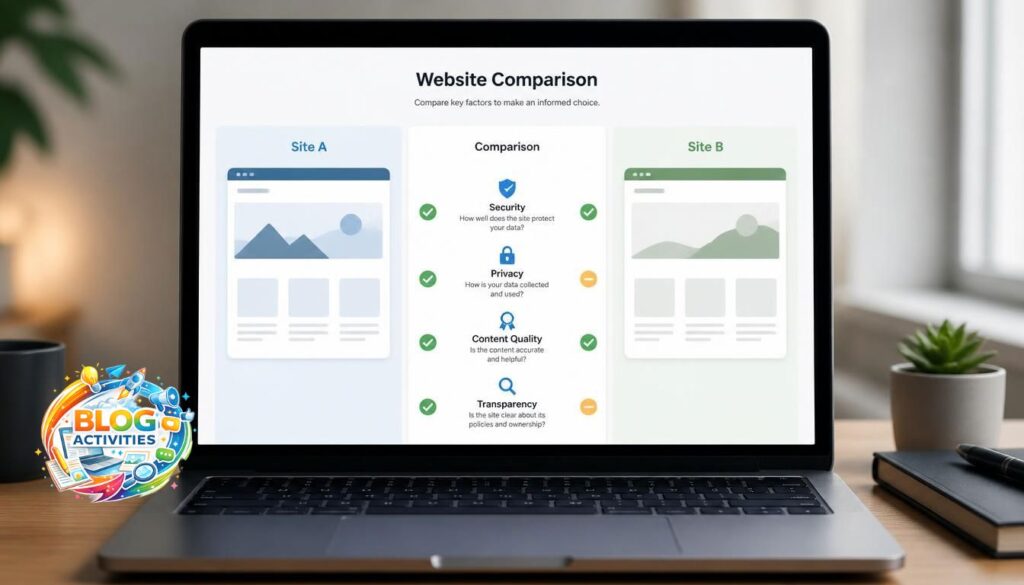
Website reliability matters because users often share information with websites without realizing how much data can be collected during a normal visit.
Some sites may use cookies, analytics tools, advertising technologies, account systems, or other tracking mechanisms. A responsible website should provide understandable information about how these technologies are used.
Reliability also matters because online information is not automatically accurate. A website can publish outdated claims, copied material, misleading descriptions, or information without supporting evidence.
Google’s guidance on helpful content emphasizes original, reliable, people-first information, including clear indications of who created content and why it exists.
A trustworthy browsing experience should therefore involve more than simply asking whether a page loads correctly. Users should consider whether the site gives them a reasonable basis for trusting what they see.
Check the Website’s Purpose
One of the simplest checks is to understand why the website exists.
Look at the homepage and determine whether the site’s purpose is clearly explained. A reliable website generally gives visitors enough context to understand what it offers and who operates it.
Be cautious when a website makes large promises without explaining how its service works. A vague purpose can make it difficult to determine whether the information presented is legitimate.
The site’s About page can also provide useful context. Look for information about the organization, publisher, creators, or editorial team where appropriate.
A clear purpose does not guarantee that a site is trustworthy, but it gives visitors an important starting point for evaluating it.
Look for Secure Connections
Technical security is another important consideration when visiting an unfamiliar website.
A browser will normally indicate whether a connection uses HTTPS. HTTPS helps protect information while it travels between the user’s browser and the website.
However, HTTPS should not be treated as proof that a website itself is trustworthy. A malicious or misleading website can also use HTTPS.
Think of HTTPS as one part of the evaluation rather than a final verdict.
If a site unexpectedly redirects you through several unrelated pages, repeatedly opens new tabs, or displays unusual security warnings, it is sensible to leave the page rather than continuing.
Review the Website’s Content
Content quality can reveal a lot about how seriously a website treats its visitors.
Read several pages instead of judging the site from one article. Look for writing that is understandable, consistent, informative, and relevant to the stated purpose of the website.
Reliable publishers generally try to avoid obvious factual errors and provide enough context for readers to understand their claims.
Google’s people-first guidance specifically encourages creators to provide original information, substantial descriptions, useful analysis, and content that leaves readers feeling they have learned enough to accomplish their goal.
A site filled with repetitive pages, copied descriptions, vague claims, and keyword-heavy text deserves more careful evaluation.
Check the About Page
An About page is useful because it can answer basic questions about a website.
Look for:
- Who operates the site
- What the website is designed to provide
- How content is produced
- How visitors can contact the publisher
- Whether there is an identifiable editorial or business presence
Not every small website will have a large editorial organization behind it. That alone is not a problem.
The important point is transparency. When a website makes it difficult to understand who is responsible for its information, visitors should be more cautious.
Review Privacy Information
Privacy should be considered before creating an account or submitting personal information.
Look for a clearly written privacy policy explaining what information the website collects and how that information may be used.
Important questions include whether the site collects:
- Email addresses
- Account information
- Device information
- Cookies
- Usage data
- Payment information
- Information submitted through forms
A privacy policy should be understandable rather than intentionally confusing.
If a website asks for information that appears unnecessary for the service it provides, stop and consider whether sharing that information is appropriate.
Never assume that a website needs every piece of information it requests.
Examine Contact Information
A reliable website should usually provide some reasonable way to contact its operator, particularly when it presents itself as a professional business or publishing platform.
Contact information may include an email address, contact form, business information, or another legitimate communication method.
A missing contact page is not automatically proof that a site is unsafe. However, when missing contact information appears alongside other warning signs, it becomes more significant.
For websites that involve accounts, purchases, subscriptions, or other important interactions, clear contact information is particularly valuable.
Watch for Excessive Pop-Ups
Advertising is common across the internet, and advertisements alone do not make a website unreliable.
The problem begins when advertisements interfere heavily with normal browsing.
Be cautious if a website constantly displays:
- Multiple pop-up windows
- Unexpected redirects
- Fake notification requests
- Repeated download prompts
- Pages that imitate browser warnings
- Buttons that behave differently from their labels
Google’s spam policies specifically identify deceptive or malicious practices that create a mismatch between what users expect and what actually happens.
A good rule is simple: if normal browsing becomes difficult because of aggressive prompts, leave the website.
Be Careful With Downloads
Unexpected downloads deserve particular attention.
Do not download an unfamiliar file simply because a webpage claims that it is required to continue. Be especially cautious when a website suddenly asks you to install software, browser extensions, or other files.
A legitimate service should generally explain what a download does and why it is necessary.
If your browser or device displays a security warning, take it seriously rather than immediately dismissing it.
Keeping your operating system, browser, and security tools updated also provides an additional layer of protection.
Check for Misleading Claims
Some websites use strong statements to attract attention without providing enough evidence.
Watch for claims that sound unusually certain, dramatic, or unrealistic.
Reliable content usually provides context instead of depending entirely on exaggerated statements. If a claim appears important, look for confirmation from independent and reputable sources.
This is especially useful when a website publishes information that could affect someone’s money, privacy, safety, or personal decisions.
A single webpage should not automatically become the final authority simply because it appears near the top of a search result.
Review the Website’s Reputation
Search engines can help users discover websites, but search visibility is not the same thing as an independent guarantee of trustworthiness.
You can research a website’s reputation by looking for information from established sources, user experiences, and independent discussions.
Pay attention to patterns rather than one isolated comment.
For example, one negative review may not tell you much. However, repeated reports about misleading practices, unexpected charges, suspicious redirects, or privacy problems deserve attention.
At the same time, online reviews can also be inaccurate or manipulated. Treat them as one piece of evidence rather than absolute proof.
Compare Different Websites
Comparing several websites can make it easier to identify differences in quality.
Instead of choosing the first result you encounter, consider factors such as:
Transparency: Is the website’s purpose clear?
Security: Does the site use HTTPS and behave normally?
Privacy: Does it explain data collection?
Content: Is the information useful and original?
Contact details: Can users identify or contact the operator?
User experience: Can visitors browse without constant interruptions?
Reputation: Are there credible independent sources discussing the site?
This approach creates a more balanced picture than relying on one signal.
Common Warning Signs
Several warning signs deserve extra attention when evaluating an unfamiliar internet chicks website.
A site should be approached cautiously when it combines several of the following:
- Unclear ownership
- No meaningful contact information
- Aggressive pop-ups
- Unexpected redirects
- Suspicious downloads
- Exaggerated claims
- Poor-quality or copied content
- Unclear privacy practices
- Requests for unnecessary personal information
- Fake-looking warnings or system messages
One warning sign does not necessarily prove that a site is harmful. The overall pattern matters.
Protect Your Personal Information
Good browsing habits can reduce unnecessary privacy risks.
Avoid sharing sensitive information with unfamiliar websites unless there is a clear and legitimate reason to do so.
Use strong, unique passwords for important accounts and enable additional account-security features when available.
It is also useful to review browser permissions from time to time. Websites may request access to features such as notifications, location, camera, or microphone. Only grant permissions when you understand why they are needed.
If a website requests access that does not make sense for its stated purpose, declining the request is a reasonable choice.
Avoid Blind Trust in Search Results
Search engines are extremely useful, but a search result should be treated as an invitation to investigate rather than a guarantee of credibility.
Google states that its ranking systems aim to surface helpful and reliable information, but it also maintains spam policies addressing deceptive and manipulative practices.
This means users should still apply their own judgment.
Check the page, examine the site’s policies, and compare important claims with trustworthy independent information.
Focus on People-First Information
For website owners, reliability also depends on how content is created.
Google recommends content that is created primarily to help people rather than content designed mainly to attract search traffic. It also encourages creators to consider who created the content, how it was produced, and why it exists.
This is useful guidance for publishers covering competitive search terms such as internet chicks website.
An article should answer the reader’s question clearly, provide meaningful information, and avoid unnecessary repetition.
Simply repeating a keyword throughout an article does not make the content more useful.
Avoid Keyword Stuffing
Using the target keyword naturally is better than forcing it into every paragraph.
A strong article can mention the phrase internet chicks website where it makes sense while using related language throughout the rest of the content.
Search engines have become increasingly focused on understanding whether content provides genuine value. Google’s Search Essentials recommend helpful, reliable, people-first content rather than pages designed primarily to manipulate search rankings.
For bloggers, this means the reader should always come first.
What Makes a Website Worth Trusting?
There is no single button that tells users whether a website is trustworthy.
Instead, reliability comes from several signals working together.
A stronger website typically has a clear purpose, transparent information, useful content, reasonable security practices, understandable privacy information, and accessible contact details.
It also avoids deceptive tactics and gives visitors a predictable browsing experience.
These characteristics do not guarantee perfection, but together they provide a stronger basis for making an informed decision.
Final Checklist
Before spending significant time on an unfamiliar website, run through this quick checklist:
1. Is the purpose of the site clear?
2. Can you identify who operates it?
3. Does the site use HTTPS?
4. Does the content appear original and useful?
5. Is there a clear privacy policy?
6. Does the website provide reasonable contact information?
7. Are there excessive pop-ups or unexpected redirects?
8. Does it ask for unnecessary personal information?
9. Are important claims supported by credible information?
10. Does the overall browsing experience feel transparent and predictable?
If several answers raise concerns, there is little reason to continue using the site.
Conclusion
Finding a reliable internet chicks website is less about trusting a particular name and more about learning how to evaluate online information.
Start with the site’s purpose and ownership. Then examine its security, privacy practices, content quality, contact information, and overall user experience. Be particularly careful with unexpected downloads, aggressive pop-ups, suspicious redirects, and requests for unnecessary personal information.
It is also important to remember that HTTPS, search rankings, professional design, or positive reviews alone cannot guarantee that a website is trustworthy. A combination of independent checks provides a much better basis for judgment.
For bloggers and website owners, the same principle applies to content creation. Google recommends original, helpful, people-first information and warns against creating large amounts of low-value content primarily to manipulate search visibility.
Ultimately, responsible browsing means slowing down when something looks unusual, protecting personal information, checking important claims, and choosing websites based on evidence rather than appearance alone.
Harlene Rosen: Biography, Life, Career, and Family
Frequently Asked Questions
What is an internet chicks website?
The phrase can refer to different types of online platforms or content sites. Its exact meaning depends on the website and the context in which the term is used.
How can I check if an internet chicks website is reliable?
Check its purpose, ownership details, privacy policy, contact information, content quality, and security practices. Also watch for suspicious redirects or downloads.
Is HTTPS enough to trust a website?
No. HTTPS helps secure the connection between your browser and the website, but it does not prove that the website itself is trustworthy or that its content is accurate.
What are common warning signs of an unreliable website?
Frequent pop-ups, unexpected redirects, unclear ownership, suspicious downloads, misleading claims, poor-quality content, and requests for unnecessary personal information can be warning signs.
How can I protect my privacy while browsing?
Avoid sharing unnecessary personal information, review website permissions, use strong passwords, keep your browser updated, and leave sites that behave suspiciously.