Payroll remains one of the most sensitive and time-consuming parts of running a business. Employees expect accurate and timely salaries. HR teams carry the pressure of calculations, deductions, compliance rules, and endless follow-ups. When things go wrong, trust breaks and frustration grows. Many companies still rely on spreadsheets or disconnected tools, which only add more risk.
HRMS Globex offers a practical way forward. It is a cloud-based human resource management system designed to bring payroll, attendance, leave, and employee records into one connected platform. Instead of juggling multiple files and manual checks, teams can work with clearer data and fewer errors. This article explores how HRMS Globex supports better payroll, what features matter most, and why it helps both HR professionals and employees.
BIO
| Label | Information |
|---|---|
| Name | HRMS Globex |
| Type | Cloud-based Human Resource Management System |
| Main Purpose | Centralize payroll, attendance, and employee data |
| Key Focus | Accurate and simplified payroll processing |
| Access Method | Web portal and employee self-service |
| Core Features | Automated payroll, attendance tracking, payslips |
| Attendance Link | Directly connected to salary calculations |
| Employee Access | View payslips, leave, and personal records |
| Compliance Support | Handles tax and statutory deductions |
| Best Suited For | Small to large organizations |
| Main Benefit | Fewer errors and faster payroll cycles |
| Data Storage | Secure and centralized employee records |
| Overall Value | Clear path to smoother payroll management |
Understanding HRMS Globex
HRMS Globex is a digital platform built to manage the full range of human resource tasks. At its core, it centralizes employee information so that payroll does not sit in isolation. Attendance records, leave balances, shift details, and salary structures all feed into the same system. This connection reduces the gaps that often cause mistakes.
The system works as a secure online portal. Employees and managers can access it through a web browser. It is designed for organizations of different sizes, from growing companies to larger operations with complex workforces. Because it runs in the cloud, there is no need for heavy local software or constant manual updates.
What sets it apart is the focus on everyday usefulness. Payroll is not treated as a separate monthly event. It becomes part of an ongoing process where data stays current and calculations happen with less human intervention.
Common Payroll Problems Companies Face
Most payroll headaches start with fragmented information. Attendance data lives in one place, leave requests in another, and salary details somewhere else. When these pieces do not talk to each other, HR teams spend hours reconciling numbers.
Manual entry creates another layer of risk. A single typing error can lead to underpayment or overpayment. Tax rules and statutory deductions change over time, and keeping up becomes a constant challenge. Overtime tracking, bonuses, and variable pay add further complexity.
Employees feel the impact too. Delayed payslips, unclear deductions, or missing payments create unnecessary stress. When staff cannot easily check their own records, they turn to HR for every small query, increasing the workload.
Compliance adds pressure as well. Organizations must meet local labor laws, tax requirements, and audit standards. Falling short can bring penalties and damage reputation. These issues are common across industries, especially where shift work or multi-location teams are involved.
How HRMS Globex Supports Accurate Payroll
HRMS Globex addresses these challenges by linking the key data sources that feed payroll. Attendance and leave records flow automatically into the salary calculation process. When an employee clocks in or applies for leave, the system updates the relevant figures without extra steps.
Salary structures can be set once and applied consistently. The platform handles gross pay, deductions, and net salary based on the rules configured for each role or location. Tax calculations and statutory contributions are applied according to the current guidelines, reducing the chance of outdated formulas.
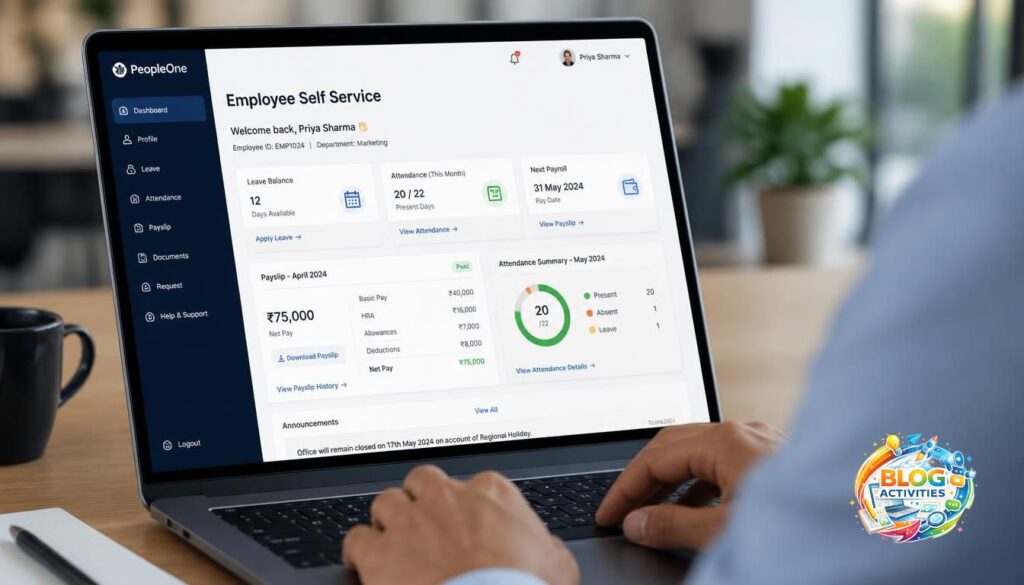
Payslip generation becomes faster and more reliable. Once the payroll cycle is reviewed and approved, the system produces individual payslips that employees can access on their own. This transparency cuts down on routine questions and builds confidence.
Overtime, allowances, and other variable components can also be managed within the same framework. Because the data stays connected, managers see a clearer picture of costs and patterns over time.
Key Features That Strengthen Payroll
One of the strongest points of HRMS Globex is its centralized employee database. Personal details, job roles, bank information, and salary history sit in one secure location. This foundation makes every payroll run more consistent.
Attendance and leave modules work hand in hand with payroll. Real-time or near real-time tracking means the system already knows who worked which shifts and who took approved leave. There is less need for last-minute data collection.
Employee self-service is another practical advantage. Staff can log in to view their attendance, leave balance, and previous payslips. They can update personal information within approved limits. This reduces the back-and-forth that often slows down payroll cycles.
Reporting tools help HR teams stay prepared. Audit-ready records, deduction summaries, and payment histories are easier to generate. Managers can review trends without building separate spreadsheets.
The platform also supports different salary structures. Whether a company uses fixed pay, variable components, or a mix of both, the system can be configured to match real business needs. Compliance features keep statutory deductions aligned with current rules, which is especially useful when regulations change.
How the Payroll Process Works in Practice
Setting up payroll in HRMS Globex begins with accurate employee profiles and salary definitions. Once these are in place, the system is ready to receive ongoing data.
Attendance records update as employees mark their presence or as biometric devices feed information into the platform. Leave applications move through approval workflows and adjust the available balance automatically.
When the payroll period ends, the system calculates earnings and deductions based on the latest data. Authorized users review the figures, make any necessary adjustments, and approve the run. Payslips are then generated and made available to employees through the portal.
Records remain stored securely for future reference. This creates a clear trail for audits or internal checks. The entire cycle becomes more predictable and less dependent on last-minute manual effort.
Benefits That Matter to HR Teams and Employees
Accuracy stands out as the most immediate benefit. Automated calculations reduce the small errors that often lead to disputes. Employees receive the correct amount on time, which strengthens trust.
Time savings are equally important. HR professionals spend fewer hours collecting data, checking spreadsheets, and answering routine queries. That time can shift toward more strategic work such as talent development or process improvement.
Compliance becomes easier to manage. When deductions and tax rules are handled systematically, the risk of penalties drops. Clear records also support smoother audits.
Employees gain greater visibility. They can check their own payslips and attendance without waiting for someone else. This sense of control improves overall satisfaction and reduces friction.
For growing organizations, the system scales more easily than manual methods. Adding new employees or adjusting salary structures does not require rebuilding processes from scratch.
Who Gains the Most from This Approach
Companies that still rely heavily on spreadsheets or disconnected tools often see the biggest improvement. Small and mid-sized businesses benefit from reduced administrative load without needing a large dedicated payroll team.
Organizations with shift-based work or multiple locations also gain clarity. When attendance data is already linked to payroll, the monthly process becomes far less chaotic.
HR teams that want to move beyond pure administration find value in the reporting and visibility features. Clearer data supports better decision-making around workforce costs and patterns.
Even larger enterprises can use the platform as a consistent layer that keeps payroll processes aligned across departments.
Practical Tips for Better Results
Success with any system depends on good setup and ongoing habits. Keep employee records complete and current. Outdated bank details or incorrect tax information will still cause problems, even with automation.
Configure salary components carefully at the beginning. Take time to map real pay structures into the system so calculations match actual company practices.
Encourage employees to use the self-service features. When staff can access their own information, the volume of routine requests drops naturally.
Review reports regularly. Looking at attendance trends, overtime patterns, and deduction summaries helps catch issues early and refine processes over time.
Provide basic training for managers and HR users. A clear understanding of workflows and approval steps prevents bottlenecks during payroll cycles.
Frequently Asked Questions
Many people ask what makes payroll more accurate in HRMS Globex. The answer lies in the automatic flow of attendance and leave data into the calculation engine. Fewer manual transfers mean fewer chances for mistakes.
Employees often want to know if they can download their own payslips. Yes, the self-service portal allows them to view and retrieve recent payslips once the payroll cycle is complete.
Another common question concerns tax and statutory deductions. The system applies these according to the rules configured for the organization, helping maintain consistency and compliance.
Companies with complex salary structures sometimes wonder if the platform can handle them. Flexible configuration options support different components, including fixed pay, allowances, and variable elements.
People also ask how attendance connects to payroll. When attendance is recorded in the system, those hours and shifts become part of the data used for salary calculations, reducing the need for separate reconciliation.
Moving Toward Clearer Payroll Management
Payroll does not have to remain a source of stress and last-minute fixes. HRMS Globex provides a structured way to bring attendance, leave, and salary data together so that calculations rest on reliable information. The result is greater accuracy, faster processing, and clearer communication with employees.
HR teams regain time that was once spent on repetitive checks. Employees gain transparency and confidence in their payments. Organizations reduce compliance risks and build more consistent processes as they grow.
The path to better payroll is not about adding more tools. It is about connecting the ones that already matter. HRMS Globex focuses on that connection, offering a practical system that supports both the operational needs of HR and the everyday expectations of the workforce. When payroll runs smoothly, trust grows and the entire organization benefits.
Pavel Durov Girlfriend Guide: Everything Confirmed
FAQs
What makes payroll more accurate with HRMS Globex?
HRMS Globex links attendance and leave data directly to salary calculations. This reduces manual transfers and the small errors that often lead to payment disputes.
Can employees access their own payslips?
Yes. Once the payroll cycle is complete, staff can log into the portal and download their payslips without waiting for HR to share them.
Does HRMS Globex handle tax and statutory deductions?
The system applies tax rules and statutory contributions based on the settings configured for the organization, helping keep deductions consistent and compliant.
Is HRMS Globex suitable for complex salary structures?
Yes. It supports fixed pay, allowances, overtime, and variable components so companies can match their actual payroll needs without forcing a one-size-fits-all approach.
How does attendance connect to payroll in HRMS Globex?
Attendance records update in the system and automatically feed into the salary calculation process, reducing the need for separate reconciliation each month.