Harlene Rosen is a name most often associated with the early life of filmmaker, comedian, writer, and actor Woody Allen. Long before Allen became internationally recognized for films such as Annie Hall and Manhattan, Rosen was part of his personal life during the formative years of his career.
Unlike many people connected to famous entertainers, Rosen did not build a public career in Hollywood. She remained largely private after her marriage to Allen ended, which means that reliable information about her life is considerably more limited than information about her former husband. What is documented, however, provides an interesting picture of a young woman who studied philosophy, shared music and intellectual interests with Allen, completed college, and later became the subject of public attention because of Allen’s comedy about their former marriage.
This article looks at Harlene Rosen’s early life, education, relationship with Woody Allen, marriage, divorce, public legal dispute, and later appearance in the historical record, while separating documented facts from claims that cannot be independently established.
BIO
| Label | Information |
|---|---|
| Full Name | Harlene Rosen |
| Known For | Woody Allen’s first wife |
| Birthplace | New York, United States |
| Nationality | American |
| Education | Hunter College |
| Field of Study | Philosophy |
| Spouse | Woody Allen |
| Marriage Year | 1956 |
| Divorce | 1962 |
| Family Background | Daughter of a shoe-shop owner |
| Public Career | Largely private |
| Known Interests | Philosophy and music |
Who Is Harlene Rosen?
Harlene Rosen was Woody Allen’s first wife. She entered his life when both were very young, before Allen had established himself as a major comedian or filmmaker.
Accounts of Allen’s early years describe Rosen as a philosophy student at Hunter College in New York. The Guardian has also reported that she was the daughter of a shoe-shop owner and that Allen met her through Jewish social circles in the Flatbush area of Brooklyn.
Her importance in biographies of Allen comes partly from the influence their relationship had on his intellectual development. Allen later described discovering philosophy through his relationship with Rosen. Her academic interests exposed him to works and ideas that became important to his broader cultural interests.
It is important, however, not to confuse her association with Allen with a public career of her own. Rosen was not a Hollywood actress, filmmaker, or television personality. Most surviving information about her comes from biographies and historical accounts of Allen’s life.
Harlene Rosen’s Early Life
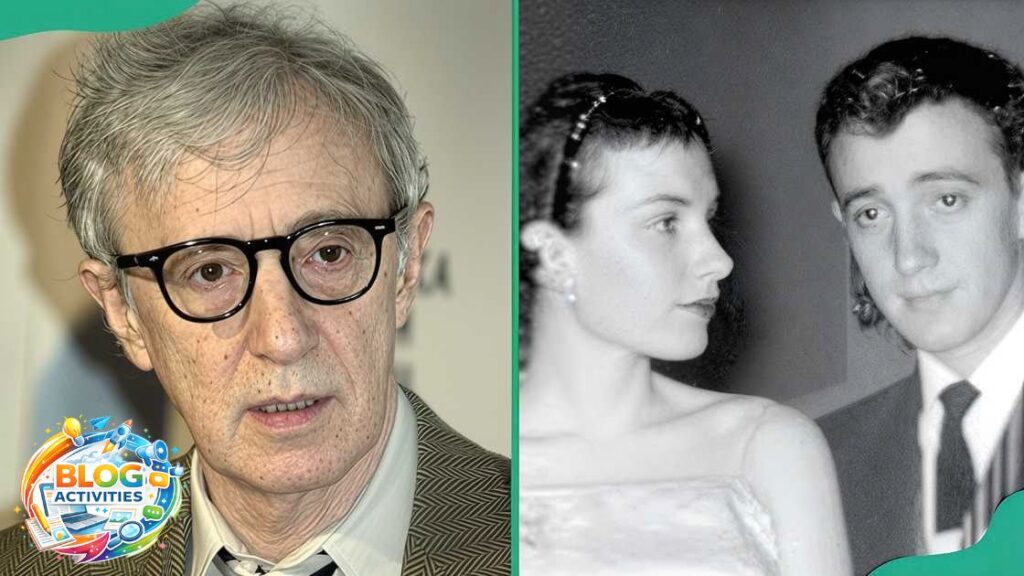
Detailed information about Rosen’s childhood is scarce. Unlike Allen, whose upbringing has been discussed extensively in biographies, Rosen did not become a public figure in her own right.
Published accounts place her in New York and connect her family with the local Jewish community. The Guardian describes her as the daughter of a shoe-shop owner and notes that she studied philosophy at Hunter College.
Her educational interests are one of the clearest parts of her early biography. She was studying philosophy during the period when her relationship with Allen developed. This detail is significant because Allen later credited his first wife with introducing him to philosophical reading.
A scholarly biography of American humorists identifies Rosen as a philosophy major at Hunter College and describes her as Allen’s high-school sweetheart.
Because so few independent records about Rosen’s childhood are publicly available, it would be misleading to provide specific claims about her parents, siblings, childhood home, or other personal details unless they can be supported by reliable sources.
Harlene Rosen and Education
Education is one of the more distinctive aspects of Rosen’s documented background.
She attended Hunter College, where she studied philosophy. Her academic interests became particularly relevant to Allen, who was developing intellectually while also building his early career as a comedy writer.
The relationship between the two appears to have been more than simply romantic. Their shared interests included books, movies, and music. Later accounts of Allen’s life describe how Rosen’s philosophy studies encouraged him to explore major philosophical and literary works.
The Guardian reported that Allen arranged for a Columbia University tutor to guide him through major works by writers and philosophers including Plato, Aristotle, Dante, and James Joyce after marrying Rosen.
This does not mean that Rosen was responsible for Allen’s entire intellectual development. It does show that her academic interests were an important part of their early relationship and that philosophy became a significant influence on Allen during this period.
Harlene Rosen and Music
Music was another interest that connected Rosen and Allen.
A profile published by All About Jazz says the pair first met during a jazz trio rehearsal. According to that account, Allen played soprano saxophone while Rosen played piano. The source also records their marriage in 1956.
Their interest in music provides another glimpse into their lives before Allen became a major public personality.
Later, when Rosen contributed a message for David Evanier’s biography of Allen, she recalled enjoying music with him. That recollection suggests that music remained part of the memories she associated with their younger years.
There is no strong evidence that Rosen pursued a professional music career, so descriptions of her should not portray her as a professional musician without qualification.
Harlene Rosen and Woody Allen
Rosen’s relationship with Woody Allen began during their teenage years.
At the time, Allen was developing his skills as a comedy writer. He had begun selling jokes and eventually worked professionally for television and other entertainers. A scholarly source on Allen’s career notes that he became involved with NBC’s writers’ program and was sent to Hollywood while still very young.
Rosen and Allen’s relationship therefore developed during a period of major change in Allen’s life.
Allen’s professional ambitions were growing while Rosen was pursuing higher education. Their relationship would eventually become a short marriage, but its historical importance comes from the fact that it occurred before Allen’s later success as a performer and filmmaker.
Harlene Rosen’s Marriage to Woody Allen
The most consistently documented year for the marriage is 1956.
A biographical record for Allen lists his marriage to Harlene Susan Rosen as beginning on March 15, 1956, and ending in divorce in November 1962.
Other sources vary when describing the couple’s ages at the time of marriage, and some accounts give different details about the precise timeline of their separation. The reliable point that can be stated confidently is that they married in 1956 while both were very young.
Their marriage took place during Allen’s early professional years rather than during the period when he was already a celebrated filmmaker.
After their marriage, the couple returned to New York. Rosen continued her education while Allen worked on comedy material and developed his professional career.
A 2024-era scholarly discussion of Allen’s career similarly describes their marriage as part of the early period when Allen was establishing himself as a writer.
A Marriage During Allen’s Early Career
The timing of the marriage is important when understanding Rosen’s place in Allen’s biography.
Allen was not yet the internationally known filmmaker audiences would later associate with Annie Hall, Manhattan, and other films. His professional identity was still developing.
Rosen’s life followed a different path. She pursued college and philosophy while Allen focused increasingly on comedy writing and performance.
That difference helps explain why the two eventually appear so differently in historical records. Allen’s career generated decades of interviews, books, films, newspaper articles, and public appearances. Rosen, by contrast, largely disappeared from public view after the marriage ended.
David Evanier’s 2015 biography Woody: The Biography was notable partly because Evanier was able to include Rosen among the people he interviewed. Kirkus Reviews specifically notes that the book included an interview with Allen’s first wife, Harlene Rosen Allen.
The Divorce
Rosen and Allen eventually divorced.
The marriage is commonly documented as ending in 1962, although some biographies discuss an earlier separation. The available sources do not always present the timeline in exactly the same way, so it is better to distinguish separation from the formal end of the marriage.
The divorce happened before Allen reached the height of his fame as a filmmaker.
Their relationship later became more complicated because Allen incorporated references to his former wife into his comedy. What may have begun as personal material eventually became part of his public persona.
That development is important because much of what the public came to know about Rosen was filtered through Allen’s own jokes and accounts, rather than through interviews with Rosen herself.
Harlene Rosen and Woody Allen’s Comedy
After the marriage ended, Allen referred to Rosen in his comedy routines.
Some of these jokes were highly personal and resulted in a public legal dispute. Academic research into Allen’s work has discussed Rosen’s role as one of the subjects of his early humor and notes that she filed a defamation lawsuit connected with jokes he made about her.
This period significantly affected how Rosen’s name entered popular culture.
Rather than becoming known because of a professional achievement, she became known partly because a famous comedian used details from their former relationship as material.
That distinction matters when evaluating biographies about her. Allen’s jokes are evidence that he publicly discussed the relationship, but they should not automatically be treated as objective descriptions of Rosen herself.
The Guardian’s account of Allen’s early life also discusses the relationship and the fact that Rosen was later referenced in his comedy.
Her Public Legal Dispute
The dispute between Rosen and Allen is one of the best-documented episodes connected with her public history.
Allen’s comedy included remarks about his former wife, and Rosen responded through legal action. Sources describe the case as a defamation dispute related to jokes and comments made publicly by Allen.
Because this subject involves statements made by one former spouse about another, it is useful to distinguish documented events from interpretations of the couple’s private relationship.
The legal dispute tells us that Rosen objected strongly enough to Allen’s public comments to take action. It does not, by itself, provide a complete account of the marriage or their private experiences.
For that reason, responsible biographies should avoid presenting old comedy routines as if they were neutral historical testimony.
What Happened to Harlene Rosen After the Divorce?
This is where reliable information becomes much thinner.
After her divorce from Allen, Rosen largely stayed away from public life. She did not establish the kind of entertainment career that would have generated extensive newspaper coverage, interviews, or professional profiles.
That absence has led to many claims online about her later life, but many of those claims are not supported by strong primary or established biographical sources.
The safest conclusion is that Rosen chose a private life after her relationship with Allen ended.
A 2015 publisher’s material for David Evanier’s biography stated that Rosen had not commented publicly on Allen since the end of their marriage in the 1960s, before Evanier interviewed her for the book.
This long period of privacy is an important part of her story.
Harlene Rosen’s 2015 Message
One of the most interesting documented moments involving Rosen came decades after her divorce.
While researching Woody: The Biography, author David Evanier eventually made contact with Rosen. Her contribution gave readers something that had been missing from many earlier accounts: her own later perspective on the relationship.
According to coverage of Evanier’s book, Rosen reflected on the years she and Allen spent together and acknowledged that their marriage had been difficult. At the same time, she remembered positive experiences involving movies, music, affection, and growing into adulthood.
The importance of this message is not that it changes every earlier account. Rather, it demonstrates that Rosen’s perspective was more complicated than the jokes and brief biographical references that had defined much of her public image.
Her contribution also provides a reminder that a person’s life cannot necessarily be reduced to the version presented by a more famous former partner.
Harlene Rosen’s Family
Information about Rosen’s family is limited.
Her father has been described in published accounts as a shoe-shop owner, while Rosen herself is identified as a philosophy student at Hunter College.
Beyond these details, reliable public information about her parents, siblings, later relatives, or private family life is scarce.
There is also no well-established public record identifying children from her marriage to Woody Allen. Major biographical references about Allen list children associated with his later relationships rather than identifying children from his marriage to Rosen.
It is important not to turn an absence of public documentation into a definite claim about someone’s entire private life. Rosen’s later family circumstances are simply not sufficiently documented in major public sources.
Did Harlene Rosen Have a Career?
There is no well-documented public career associated with Rosen.
Her education in philosophy is established in biographical accounts, but available sources do not provide evidence of a major professional career in entertainment or another public field.
This lack of career information should not be interpreted as a lack of achievement. It simply reflects the fact that Rosen was not a public personality and appears to have maintained her privacy.
Many online biographies attempt to fill this gap with unsupported claims about professions, wealth, lifestyle, or later activities. Those details should be approached carefully unless they can be traced to reliable documentation.
Why Is Harlene Rosen Still Remembered?
Harlene Rosen remains part of the historical record largely because of her connection to Woody Allen during the earliest stage of his career.
Her story intersects with several important elements of Allen’s biography: his youth, his early comedy writing, his exposure to philosophy, his development as a performer, and the personal experiences that later appeared in his public material.
But Rosen’s significance should not be reduced entirely to being someone’s former wife.
The available record shows a young woman who studied philosophy, shared intellectual and musical interests with Allen, completed college, experienced a difficult marriage, and later chose a largely private life.
Her 2015 contribution to Evanier’s biography is particularly valuable because it gives a rare glimpse of her own perspective after decades away from public attention.
Harlene Rosen’s Life in Perspective
The story of Harlene Rosen is unusual because the public knows much less about her than about the person with whom she was once married.
Allen went on to build a long career in comedy and filmmaking. His professional life generated an enormous amount of documentation, while Rosen remained mostly outside the spotlight.
As a result, her biography needs to be approached with caution.
The strongest facts are relatively simple: Rosen was Allen’s first wife, she studied philosophy at Hunter College, they married in 1956, their marriage ended in divorce, and she later gave biographer David Evanier a rare account of their relationship.
Beyond those points, the public record becomes increasingly limited.
That limitation is itself meaningful. Not every person connected to a famous celebrity wants a public biography, and a lack of information should not be treated as an invitation to speculate.
Liz Gebhardt Die? Facts About the Recent Reports
Frequently Asked Questions
Who is Harlene Rosen?
Harlene Rosen is best known as Woody Allen’s first wife. She was a philosophy student at Hunter College during the period of their relationship and marriage.
When did Harlene Rosen marry Woody Allen?
The marriage is generally documented as taking place in 1956, with one biographical record giving March 15, 1956, as the wedding date.
What did Harlene Rosen study?
Rosen studied philosophy at Hunter College. Accounts of Allen’s early intellectual development describe her interests as an influence on his exposure to philosophy and major literary works.
Did Harlene Rosen have a career in entertainment?
There is no well-established evidence that Rosen had a major entertainment career. She remained largely outside the public spotlight after her marriage to Allen.
What happened to Harlene Rosen after her divorce?
Very little about her later private life is reliably documented. She largely stayed out of public view, although she later contributed a message to David Evanier’s 2015 biography of Woody Allen.
Did Harlene Rosen and Woody Allen have children?
Major public biographical references do not identify children from their marriage. Allen’s documented children are associated with his later family relationships.
Conclusion
Harlene Rosen’s biography is ultimately a story about a private person whose life became publicly visible through her connection to a much more famous figure. She was a philosophy student, a young wife, and an important part of Woody Allen’s early adult life before his rise to international fame.
Their marriage was brief in the context of Allen’s long life, but it occurred during a formative period when he was developing as a writer and comedian. Rosen’s intellectual interests also became part of the environment in which Allen encountered philosophy and literature.
The later history was more complicated. Allen used aspects of their relationship in his comedy, Rosen became involved in a defamation dispute, and she subsequently remained largely silent for decades.
Her eventual contribution to David Evanier’s biography offered a rare opportunity to hear from Rosen herself. That perspective adds an important layer to a story that had often been told primarily through Allen’s public persona.
Ultimately, the most responsible way to write about Harlene Rosen is to recognize both what is documented and what remains private. Her life does not need unsupported details to be interesting. The facts that can be established already tell the story of a woman who crossed paths with one of the most recognizable figures in American comedy and then largely chose to live beyond the public spotlight.