Luxury hospitality is built on more than beautiful rooms, elegant interiors, and exceptional service. It is about making guests feel valued before they arrive, during their stay, and long after they leave.
Email marketing gives luxury hotels an opportunity to continue that experience beyond the property. A thoughtful message can remind a guest of a memorable stay, introduce a new dining experience, offer a personalized package, or make planning the next visit easier.
Luxury hotel email marketing is most effective when it feels like an extension of the hotel’s hospitality rather than a series of promotional messages. The goal is not simply to send more emails. It is to send the right message to the right guest at the right moment.
When planned carefully, email marketing can help luxury hotels strengthen guest relationships, encourage direct bookings, improve retention, and communicate the unique experiences that make their properties worth visiting.
This guide explains how luxury hotels can develop a practical email marketing strategy that combines personalization, elegant communication, guest experience, and measurable business results.
BIO
| Label | Information |
|---|---|
| Topic | Luxury Hotel Email Marketing |
| Industry | Travel and Hospitality |
| Marketing Type | Digital Email Marketing |
| Main Purpose | Increase direct hotel bookings |
| Target Audience | Luxury hotel guests |
| Key Strategy | Personalized email campaigns |
| Email Content | Exclusive offers and updates |
| Guest Engagement | Relevant and timely communication |
| Customer Loyalty | Build long-term guest relationships |
| Booking Strategy | Promote direct reservations |
| Automation | Welcome and follow-up emails |
| Performance Tracking | Open rates, clicks, and conversions |
| Main Benefit | Better guest retention and revenue |
What Is Luxury Hotel Email Marketing?
Luxury hotel email marketing is the use of email to communicate with current and potential guests in a personalized, thoughtful, and brand-focused way.
It includes promotional campaigns, booking confirmations, pre-arrival messages, guest experience updates, post-stay communication, and invitations to return.
Unlike general email marketing, luxury hospitality places greater emphasis on personal recognition, service quality, exclusivity, and emotional connection.
For example, a standard hotel email might promote a discounted room for the weekend. A luxury hotel email could invite a returning guest to enjoy a private dining experience, a spa treatment, or a personalized suite arrangement.
The difference is not simply the price of the offer. It is the way the hotel understands and responds to the guest’s expectations.
A successful strategy combines useful information with a warm and professional tone. Every email should have a clear purpose and make the guest feel that the hotel values their time.
Why Email Marketing Matters for Luxury Hotels
Building Stronger Guest Relationships
Luxury hotels often serve guests who expect a high level of attention. Email provides an opportunity to maintain that relationship even when the guest is not staying at the property.
A thoughtful message after a memorable visit can remind someone of the experience and keep the hotel in their mind when they plan another trip.
Instead of sending a generic promotion, the hotel can share information about a new restaurant menu, a seasonal experience, or an upcoming event that may interest previous guests.
The strongest guest relationships develop when communication feels helpful rather than demanding.
Increasing Direct Bookings
Many travelers discover hotels through online travel agencies, travel websites, or search engines. Email can help hotels encourage previous guests and interested subscribers to book directly in the future.
A direct booking campaign may highlight flexible booking options, personalized room recommendations, exclusive packages, early access to seasonal offers, or direct communication with the hotel team.
Hotels should clearly explain the benefits of booking directly and ensure that any advertised offer is accurate.
The objective is to make the hotel’s own booking process convenient and appealing.
Improving Guest Loyalty and Retention
Guest retention is important because attracting a completely new customer often requires more marketing effort than maintaining a relationship with someone who already knows the property.
Email helps hotels stay connected between visits. A guest who enjoyed a particular destination may appreciate receiving information about another property, a new experience, or a seasonal package.
Loyalty communication should recognize the guest’s relationship with the hotel without making every message about spending more money.
A sincere thank-you, an invitation to a special event, or early access to a new experience can create a stronger impression than frequent discounts.
Promoting Exclusive Hotel Experiences
Luxury hotels offer more than accommodation. Their experiences may include fine dining, wellness facilities, private tours, cultural activities, and special celebrations.
Email marketing allows hotels to introduce these experiences to guests who may not know they are available.
For example, a hotel could send a wellness retreat invitation to subscribers interested in spa experiences. Another campaign could introduce a chef’s seasonal tasting menu to guests who previously booked dining services.
This approach helps hotels promote their full range of services while keeping communication relevant.
Proven Luxury Hotel Email Marketing Strategies
Personalize Emails for Every Guest
Personalization is one of the most valuable elements of luxury hotel email marketing.
A guest who regularly books ocean-view rooms may appreciate a message about a new property overlooking the sea. A guest who enjoys wellness experiences may be more interested in a spa package than a general room promotion.
Hotels can use information such as booking history, preferred room categories, previous requests, and loyalty status to improve relevance.
However, personalization should always be handled carefully. Hotels should use information guests have willingly provided and avoid mentioning sensitive or unexpected personal details.
A simple greeting using the guest’s name is a useful starting point, but genuine personalization goes further.
The best personalization makes a guest’s experience easier, more comfortable, or more meaningful.
Create Exclusive Offers for Loyal Guests
Luxury guests may value special access more than a basic price reduction.
Hotels can create exclusive offers such as early access to holiday packages, private dining reservations, complimentary welcome amenities, or preferred booking opportunities.
These offers should be designed around the hotel’s brand and operational capabilities.
For example, a boutique property might invite returning guests to experience a new suite before it becomes widely promoted. A resort could offer loyal guests priority access to a limited number of wellness appointments.
The offer should feel valuable without creating unrealistic expectations.
Use Elegant and Consistent Email Design
Email design should reflect the hotel’s visual identity.
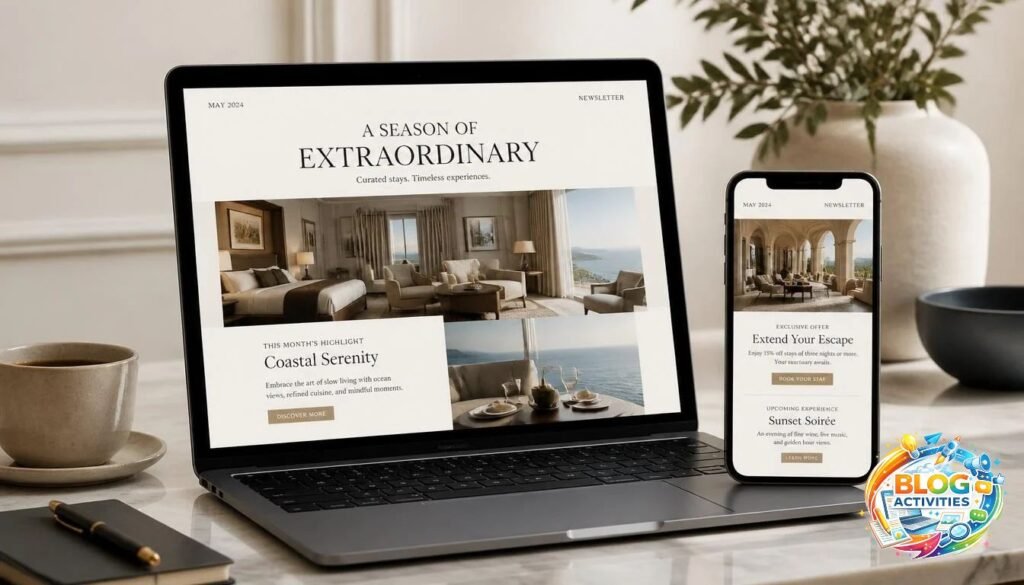
A luxury property may use high-quality photography, restrained typography, generous spacing, and a clean layout. These elements help the message feel polished and easy to read.
Avoid filling the email with too many images, promotional banners, or competing calls to action.
A well-designed email usually focuses on one main experience or offer. Supporting information should be short and organized so readers can understand the message quickly.
The design should also work properly on mobile devices because many guests check their email while traveling or planning a trip.
Promote Seasonal Packages and Special Events
Seasonal campaigns give hotels a natural reason to communicate with subscribers.
Examples include winter wellness retreats, summer seaside experiences, holiday dining packages, romantic weekend stays, autumn countryside escapes, and New Year’s celebration packages.
A seasonal email should explain what makes the experience special and who might enjoy it.
Rather than simply announcing a package, describe the atmosphere, activities, and practical benefits. Help the reader imagine the experience without making exaggerated promises.
Encourage Direct Bookings With Relevant Campaigns
A direct booking campaign should make the next step easy.
Hotels can send targeted emails to past guests with information about upcoming travel seasons, new property features, or packages related to their previous stay.
The booking process should be simple, and the offer should be clearly explained.
Avoid creating unnecessary urgency or suggesting that a guest must book immediately when no genuine deadline exists.
Trust is more valuable than a short-term increase in clicks.
Types of Email Campaigns Luxury Hotels Should Send
Welcome Emails
A welcome email introduces the hotel to someone who has subscribed to receive updates.
It should briefly explain what makes the property distinctive and what type of communication the subscriber can expect.
A luxury hotel might welcome a new subscriber with a short introduction to its accommodation, dining, wellness facilities, or destination experiences.
The message should feel warm and professional. Avoid overwhelming new subscribers with a long list of promotions immediately after they sign up.
Pre-Arrival Emails
Pre-arrival communication is an important opportunity to improve the guest experience before the stay begins.
After a reservation is confirmed, the hotel can send useful information about check-in, transportation, dining reservations, and available services.
A carefully timed pre-arrival email may also introduce relevant optional experiences, such as a room upgrade, private transfer, spa appointment, or special dinner.
The purpose is to help guests prepare and make their stay more comfortable.
Post-Stay Emails
The relationship should not end when a guest checks out.
A post-stay email can thank the guest for choosing the hotel, invite them to share feedback, and provide a convenient way to contact the team if they have any concerns.
A genuine thank-you message is often more appropriate than immediately sending another sales promotion.
After a suitable interval, the hotel may introduce a relevant future experience or invite the guest to return.
Abandoned Booking Emails
Some travelers begin researching or booking a hotel but leave before completing the reservation.
Where the hotel has permission and the necessary booking information, an abandoned booking email can remind the traveler about the property they were considering.
The message should provide useful details, such as booking assistance or answers to common questions.
Avoid sending repeated reminders or claiming that a room is still available unless the information has been verified.
Birthday and Anniversary Emails
Special occasions can provide a meaningful reason to contact guests.
A hotel may send a birthday greeting, anniversary message, or invitation to celebrate a milestone at the property.
If the guest has previously shared a relevant preference, the hotel can suggest a suitable experience.
These messages should be sincere and respectful. A personal occasion should not become an excuse for aggressive sales language.
How to Build a High-Quality Hotel Email List
A successful email marketing strategy begins with a reliable list of people who genuinely want to hear from the hotel.
Hotels can invite visitors to subscribe through their website, booking process, loyalty program, or in-person guest interactions.
The invitation should explain what subscribers will receive, such as destination updates, seasonal packages, hotel news, or exclusive experiences.
Never assume that every guest who provides an email address has agreed to receive promotional marketing. A booking confirmation and a marketing newsletter serve different purposes.
Use a clear consent process that follows the laws applicable to the hotel’s location and its guests.
Hotels should also avoid purchasing random email lists. These lists may contain outdated addresses, uninterested recipients, or people who never agreed to receive marketing messages.
A smaller, engaged list is often more valuable than a large list that produces complaints and poor engagement.
How to Write Luxury Hotel Emails That Convert
Write Compelling Subject Lines
The subject line is the first part of the email most recipients notice.
It should clearly communicate the message’s value without exaggeration.
Examples include:
- Discover Our New Wellness Retreat
- A Special Experience for Your Next Stay
- Your Next Escape Awaits
- Explore Our Seasonal Dining Experience
- Planning Your Return to the Coast?
A good subject line creates interest while accurately representing the email content.
Avoid misleading claims, excessive punctuation, and vague phrases that do not tell the reader what to expect.
Use a Warm and Professional Brand Voice
Luxury communication should feel polished but not distant.
Write as though a thoughtful hotel team member is speaking to a valued guest. Use clear language, natural expressions, and a respectful tone.
For example, instead of writing, “Buy our premium package now and enjoy an amazing deal!” a more appropriate message might be:
“We would be delighted to welcome you for a relaxing weekend and introduce you to our new spa experience.”
The second example focuses on the guest’s experience rather than pressure.
Focus on Guest Benefits
Every email should answer one important question: Why should the guest care about this message?
If the hotel is promoting a suite upgrade, explain the additional comfort or space it offers.
If the hotel is introducing a dining package, describe the menu, atmosphere, or experience.
If the email is about a destination, provide practical information that helps the guest plan.
Clear benefits make the message more useful and improve the chances that readers will take action.
Include a Clear Call to Action
A call to action tells the reader what to do next.
Examples include:
- Explore the Experience
- View Available Rooms
- Plan Your Stay
- Reserve a Table
- Discover the Package
Each email should have a primary action that matches its purpose.
A guest welcome email may simply invite the reader to explore the property. A pre-arrival message may encourage them to arrange transportation or reserve a restaurant.
Avoid placing too many competing buttons in one email.
Best Practices for Luxury Hotel Email Marketing
Maintain Brand Consistency
Every email should reflect the hotel’s identity.
Use consistent colors, typography, photography, and tone. The email should feel connected to the hotel’s website, booking experience, and on-property service.
Consistency builds recognition and makes communication appear more professional.
Send Emails at Appropriate Times
Email timing should depend on the purpose of the message and the guest’s journey.
A booking confirmation should arrive promptly. A pre-arrival message should provide enough time for the guest to make arrangements. A post-stay thank-you should be sent while the experience is still fresh.
Promotional campaigns should be scheduled according to audience preferences and campaign performance.
There is no universal best time for every luxury hotel. Test different schedules and use the results to develop a sensible communication plan.
Avoid Sending Too Many Emails
Luxury guests may appreciate thoughtful communication, but frequent promotional messages can become irritating.
Create a simple email calendar and set reasonable frequency limits.
If a guest is already receiving booking-related messages, consider whether another promotional campaign is necessary at the same time.
The objective is to maintain a meaningful relationship, not to occupy the guest’s inbox.
Protect Guest Privacy
Hotels often collect information about reservations, preferences, and special requests.
This information should be handled responsibly and only used for appropriate purposes.
Limit access to guest data, maintain secure systems, and follow applicable privacy and marketing regulations.
Guests should be able to understand how their information is used and how they can manage their marketing preferences.
Test Emails Before Sending
Before launching a campaign, check the subject line, email content, images, booking information, and calls to action.
Make sure the message displays properly on mobile and desktop devices.
Test the booking process to ensure that the destination page works and that the offer matches the email.
A small error can create confusion and reduce guest confidence.
How to Measure Luxury Hotel Email Marketing Success
A hotel should measure email marketing according to its business goals, not simply the number of messages sent.
Different campaigns have different purposes. A pre-arrival email may be designed to improve guest satisfaction, while a seasonal campaign may aim to generate bookings.
Email Open Rate
Open rate estimates how many recipients opened an email.
It can help evaluate subject lines and general campaign interest, but it should not be treated as a perfectly accurate measure. Privacy features in some email services can automatically load tracking images and make open activity difficult to measure reliably.
For this reason, hotels should use open rate as one indicator rather than the only measure of success.
Click-Through Rate
Click-through rate measures how many recipients clicked a link in the email.
It can help a hotel understand whether the content, offer, and call to action encouraged readers to take the next step.
For example, a campaign promoting a spa package can measure how many recipients visited the spa booking page.
Conversion Rate
Conversion rate measures how many recipients completed the intended action.
For a hotel, this may include completing a room reservation, booking a spa treatment, reserving a restaurant table, purchasing a hotel experience, or joining a loyalty program.
Conversion tracking helps connect email activity with actual business outcomes.
Revenue From Email Campaigns
Hotels should track revenue generated through email whenever reliable attribution is available.
Use campaign tracking parameters and booking-system reporting to identify reservations associated with email campaigns.
Compare campaign revenue with the cost of creating and sending the emails.
This helps management understand which campaigns contribute meaningful business value.
Unsubscribe and Bounce Rates
Unsubscribe rate shows how many recipients choose to stop receiving marketing emails.
Bounce rate measures emails that could not be delivered.
A sudden increase in either metric may indicate problems with list quality, message relevance, sending frequency, or technical setup.
Hotels should investigate these signals and make improvements rather than continuing to send the same campaign.
Common Luxury Hotel Email Marketing Mistakes to Avoid
Sending the Same Email to Every Guest
A family traveling during school holidays may have different needs from a couple planning a romantic weekend.
Sending identical offers to every subscriber can make the hotel’s communication feel generic.
Use relevant audience groups and tailor the message to their interests whenever possible.
Relying Too Much on Discounts
Luxury hotels should be careful about using price reductions as the main marketing strategy.
Frequent discounts can weaken the perception of exclusivity and encourage guests to wait for the next promotion.
Instead, consider value-added offers, personalized services, or unique experiences that support the hotel’s positioning.
Ignoring Mobile Email Design
An email that looks elegant on a desktop may be difficult to read on a phone.
Use readable text, appropriately sized images, and clear buttons.
Keep paragraphs short and avoid layouts that require excessive scrolling or zooming.
Making Emails Too Promotional
Not every message needs to sell something.
Guests may appreciate destination guides, seasonal recommendations, local cultural information, or useful travel tips.
A balanced content strategy can keep subscribers interested without overwhelming them with offers.
Failing to Follow Up on Guest Feedback
If a guest raises a concern in a post-stay email, the hotel should have a process for responding.
A feedback request should not be treated as a simple marketing activity. It is also an opportunity to identify service issues and improve the guest experience.
Luxury Hotel Email Marketing Campaign Ideas
Hotels can create campaigns around experiences that reflect their property and destination.
- Weekend escape campaign: Introduce a relaxing two-night stay with dining or wellness options.
- Luxury spa campaign: Share treatment options and wellness experiences with guests interested in relaxation.
- VIP guest campaign: Offer returning guests early access to a new package or special event.
- Seasonal dining campaign: Promote a chef’s seasonal menu or a special culinary event.
- Romantic getaway campaign: Highlight suitable rooms, dining experiences, and celebration services.
- Destination discovery campaign: Share local attractions, cultural experiences, and recommendations for an upcoming visit.
The best campaign ideas are those that connect naturally with the hotel’s services and the interests of its guests.
A property in a coastal destination may focus on ocean experiences, while a city hotel may highlight dining, shopping, or cultural attractions.
Conclusion
Luxury hotel email marketing is most effective when it reflects the same care and attention that guests expect from the property itself.
A successful strategy does not depend on sending the largest number of emails or offering the biggest discounts. It depends on understanding guests, communicating at the right moments, and sharing experiences that genuinely matter to them.
Hotels can begin with a few essential campaigns: a welcome email, a useful pre-arrival message, a thoughtful post-stay thank-you, and a relevant invitation to return.
Over time, guest preferences, campaign performance, and feedback can help improve the strategy.
When email marketing is built around genuine hospitality, it becomes more than a promotional channel. It becomes a lasting connection between the hotel and its guests.
Savani Quintanilla Biography, Family, and Personal Life
Frequently Asked Questions
What is luxury hotel email marketing?
Luxury hotel email marketing is a communication strategy used by premium hotels to build guest relationships, promote exclusive experiences, encourage direct bookings, and improve guest loyalty through personalized email campaigns.
How can luxury hotels increase bookings through email marketing?
Hotels can increase bookings by sending relevant seasonal offers, personalized recommendations, pre-arrival messages, and invitations to return. A convenient booking process and clear guest benefits can also encourage direct reservations.
What types of emails should luxury hotels send?
Luxury hotels can send welcome emails, booking confirmations, pre-arrival messages, guest experience updates, post-stay thank-you emails, seasonal promotions, and personalized invitations for future stays.
How often should luxury hotels send marketing emails?
There is no fixed frequency for every property. Hotels should consider guest preferences, campaign relevance, and engagement. A thoughtful monthly newsletter combined with useful automated messages may be more effective than frequent promotional emails.
What is the best email marketing strategy for luxury hotels?
The best strategy combines guest segmentation, thoughtful personalization, timely communication, elegant design, and clear performance measurement. The focus should be on creating a valuable guest experience rather than sending generic promotions.